Pages

Showing posts with label reading. Show all posts

September 24, 2012

Reading A Clash of Kings


Reading George R.R. Martin’s A Clash of Kings. Loving it of course.

I’m at that stage, halfway through, where I just want to burrow into my bed and do nothing else but read read read! Not eat, not sleep, not take care of kids.  Well, that won’t work, will it?  So I’m reading a lot, interspersed with a bleary-eyed emergence from my room to get supper.

Well, maybe it’s not as bad as all that, but you know how it is.

I am continually struck by how skillful George is.  As I’m reading, pulled inexorably along by the story, another part of me is standing back going, hmmm, I could learn a lot from this.  The series is so grounded in historical reality, and George takes no prisoners and you really don’t know who’s going to die.  It’s the perfect combination of fantasy and horror and history.  His world-building and -conveying is the best I’ve read in years.  And his characters.  He has strong women and strong men and flawed people and people trying not to be flawed.  They feel fleshed out and consistent but contradictory in a good way. Gosh, I wish I could do that.

I’m in, and I love it.

May 3, 2012

“Continuity of the Parks,” by Julio Cortazar


Old man reading Bible in wicker chair on farmhouse porch

As I’ve mentioned, I’m reading my way through the fantastic anthology The Story and Its Writer.  Here is one of the best descriptions of being swept away reading a novel in the short “Continuity of the Parks” by Julio Cortazar (the complete short below). I love this. 

The Continuity of Parks  
by Julio Cortazar
He had begun to read the novel a few days before. He had put it aside because of some urgent business conferences, opened it again on his way back to the estate by train; he permitted himself a slowly growing interest in the plot, in the characterizations. That afternoon, after writing a letter giving his power of attorney and discussing a matter of joint ownership with the manager of his estate, he returned to the book in the tranquility of his study which looked out upon the park with its oaks. Sprawled in his favorite armchair, its back toward the door--even the possibility of an intrusion would have irritated him, had he thought of it--he let his left hand caress repeatedly the green velvet upholstery and set to reading the final chapters. He remembered effortlessly the names and his mental image of the characters; the novel spread its glamour over him almost at once. He tasted the almost perverse pleasure of disengaging himself line by line from the things around him, and at the same time feeling his head rest comfortably on the green velvet of the chair with its high back, sensing that the cigarettes rested within reach of his hand, that beyond the great windows the air of afternoon danced under the oak trees in the park. Word by word, licked up the sordid dilemma of the hero and heroine, letting himself be absorbed to the point where the images settled down and took on color and movement, he was witness to the final encounter in the mountain cabin. The woman arrived first, apprehensive; now the lover came in, his face cut by the backlash of a branch. Admirably, she stanched the blood with her kisses, but he rebuffed her caresses, he had not come to perform again the ceremonies of a secret passion, protected by a world of dry leaves and furtive paths through the forest. The dagger warmed itself against his chest, and underneath liberty pounded, hidden close. A lustful, panting dialogue raced down the pages like a rivulet of snakes, and one felt it had all been decided from eternity. Even to those caresses which writhed about the lover's body, as though wishing to keep him there, to dissuade him from it; they sketched abominably the fame of that other body it was necessary to destroy. Nothing had been forgotten: alibis, unforeseen hazards, possible mistakes. From this hour on, each instant had its use minutely assigned. The cold-blooded, twice-gone-over reexamination of the details was barely broken off so that a hand could caress a cheek. It was beginning to get dark.
Not looking at each other now, rigidly fixed upon the task which awaited them, they separated at the cabin door. She was to follow the trail that led north. On the path leading in the opposite direction, he turned for a moment to watch her running, her hair loosened and flying. He ran in turn, crouching among the trees and hedges until, in the yellowish fog of dusk, he could distinguish the avenue of trees which led up to the house. The dogs were not supposed to bark, and they did not bark. The estate manager would not be there at this hour, and he was not there. He went up the three porch steps and entered. The woman's words reached him over a thudding of blood in his ears: first a blue chamber, then a hall, then a carpeted stairway. At the top, two doors. No one in the first room, no one in the second. The door of the salon, and then, the knife in his hand, the light from the great windows, the high back of an armchair covered in green velvet, the head of the man in the chair reading a novel.

April 26, 2012

The Best Anthologies, or a Mash Note to Anthony Doerr


You know how you idly (see obsessively) click on anything written by certain people?  Anthony Doerr is one of these for me.  He is so smart and personable and such a wonderful writer.  There’s a piece he wrote for the Lit Pub called “A Universe That’s Three Inches Tall and Weighs Three Pounds” I read last year that talks about his love of books, in particular one thick anthology of short stories that he lugged all the way across New Zealand.  Well, of course, I immediately went out and got a copy.

Oh, man.  It is one of the two best anthologies I have ever read.  It’s called The Story and Its Writer, edited by Ann Charters, and it has all the greats ~ everything from “An Occurrence at Owl Creek Bridge” to “Tiny, Smiling Daddy.”  The best stories by the best writers of all time.  (The other anthology that is just as great ~ for that very same reason ~ is The Ecco Anthology of Contemporary American Short Fiction.)

I am about a third of the way through, with a glorious two-thirds left to read.  I alternately gobble and savor, ravage and caress this volume!  I spend my day looking forward to running a hot bubble bath and cracking it open at the next jewel of a story, wending my way night by night through a fantastic journey of words.

So, if you’re a short story buff, take note and get a copy of each of these. Oh, and give Tony a hug for me when you see him!

April 5, 2012

The IMDB of Books?


Suppose you were looking for that book.  You know the one?  That one where the world has been obliterated by an atomic blast and now there are the normals and the mutants, and all the mutants want to do is to be a normal, and there’s this potent drug called death eggs, which are mutated frogs eggs that make you die for a while and then come back to life.

Well, if you were wondering, that particular book (out of print) is called Freaks Amour by Tom De Haven.

So, if you’re looking for a book but can’t remember the title nor the author nor any of the characters’ names, what do you do?  Or you want a book like the book you just finished?  Or what are other books by the same author?  Is there an IMDB of books?  I’ve come across a few candidates.

·         Wikipedia ~ Of course.  Lots of good info there.
·         Amazon ~ Of course.  What better way to find books like the one you just read.
·         Goodreads ~ Once again, of course. And the social and review aspects are great.
·         For very old books, Project Gutenberg ~ Love the digital full-text!

But there are those that are vying to be the actual IMDB of books.

·         Internet Book List at www.iblist.com. Much more straightforward database.
·         Small Demons at www.smalldemons.com. More bells and whistles and markets itself as a site for the details. (Thanks for Dystel & Goderich for the link!)

Any other suggestions?  Where can we go for book detail? 

I haven’t used these last two sites extensively, but I’d be happy to hear any feedback you have on them!

My great friend Ken mentioned independent book stores! Powell's and the Tattered Cover and so many more.  Alibris, also, of course!

March 28, 2012

Smoky the Cowhorse, by Will James


I’ve been reading the classic Smoky the Cowhorse by Will James to my five-year-olds.  They love it.  Will James actually lived up near the summer pasture of the ranch where I grew up, up in southern Montana in the Pryor Mountains.  He wrote great books for kids and illustrated them himself.  His drawings are so lifelike, very Remington/Russell.  Here’s the part that leaves my kids rolling in the aisles, and when I read it, I exaggerate, “big mountains TWO FEET HIGH” and “wide valleys SIX OR EIGHT FEET acrost” and make the hand motions.


The rest of that day was full of events for Smoky. He explored the whole country, went up big mountains two feet high, wide valleys six or eight feet acrost, and at one time was as far as twelve feet away from his mammy all by himself. He shied at a rock once; it was a dangerous-looking rock, and he kicked at it as he went past. All that action being put on at once come pretty near being too much for him and he come close to measuring his whole length on Mother Earth once again. But luck was with him, and taking it all he had a mighty good time. When the sun went to sinking over the blue ridges in the West, Smoky, he missed all the beauty of the first sunset in his life;--he was stretched out full length, of his own accord this time, and sound asleep.
The night was a mighty good rival of what the day had been. All the stars was out and showing off, and the braves was a chasing the buffalo plum around the Big Dipper, the water hole of The Happy Hunting Grounds. But all that was lost to Smoky; he was still asleep and recuperating from his first day's adventures, and most likely he'd kept on sleeping for a good long spell, only his mammy who was standing guard over him happened to get a little too close and stepped on his tail.
Smoky must of been in the middle of some bad dream. His natural instinct might of pictured some enemy to his mind, and something that looked like a wolf or a bear must of had him cornered for sure. Anyway, when he felt his tail pinched that way he figgered that when a feller begins to feel it's sure time to act, and he did. He shot up right under his mammy's chin, let out a squeal, and stood there ready to fight. He took in the country for feet and feet around and looking for the enemy that'd nipped him, and finally in his scouting around that way he run acrost the shadow of his mammy. That meant but one thing, safety; and that accounted for and put away as past left room for a craving he'd never noticed in his excitement. He was hungry, and proceeded right then and there to take on a feed of his mammy's warm, rich milk.


You can read the whole book at Project Gutenberg.

March 20, 2012

A Sentence


Don't you just love coming across one of those sentences that just knocks your socks off?  Here's one from James Baldwin's "Sonny's Blues." Wow.

"These boys, now, were living as we'd been living then, they were growing up with a rush and their heads bumped abruptly against the low ceiling of their actual possibilities."

March 13, 2012

In Which I Throw the Book Across the Room

Last night, I tried, yet again, to read a memoir I had picked up.  I won’t mention its name.  It had such potential.  Very dramatic events.  Heart-wrenching life changes.  But the writer refused to settle, kept jumping around in time, and kept telling me everything instead of showing.  It just made me frustrated.  She didn’t trust herself or the events to be dramatic enough in their very existence, in the simple details of what happened.  If she would have, I’d’ve been there with her every step of the way.  Rather than beginning by stating in bare facts what had happened, she gave us two full chapters of now and of interpretation, and she kept telling us what the effects were.  She should have just said what happened, laid out in scenes and details, and then gone back and told the story from the beginning linearly, with scenes connected with summary. It was very frustrating.

I found myself wishing deeply for my friend Ken Olsen’s memoir.  I’ve only read a bit of it, but it’s deeply moving, and it’s set in scene and summary with lots of rich detail.  It reads a bit like Steinbeck.  It hasn’t been published yet, and Ken does not yet have an agent (hint, hint, all you agents out there).

March 7, 2012

Making You Feel, Part 4

Couple Reading, by Natoly Art

Today, an observation.  Women read fiction and men read nonfiction.

Vast generalization, I know.  I haven’t taken the time to do the research to verify this, but it seems like I’ve read this over the years.  I did look at the recent NEA report about our reading Reading on the Rise but couldn’t find it.

So why is this?  I have a theory.

Exhibit A.  At least the way I was raised, boys were taught to suppress their feelings while girls were expected to cultivate their emotional intelligence. Therefore, when they grow up, men are uncomfortable with emotion while women seek it out.

Exhibit B. The goal of most fiction is to make you feel, while the goal of a lot of nonfiction is to make you think.

Ergo, women read fiction and men read nonfiction.

What do you think?  Crackpot idea?

February 7, 2012

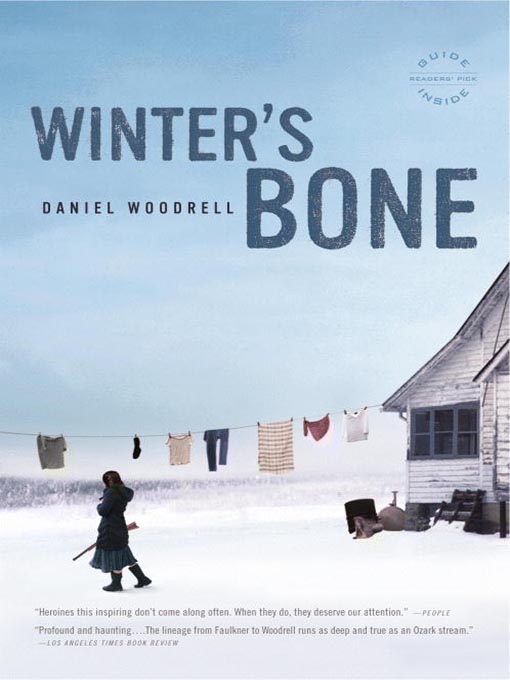
Winter’s Bone, by Daniel Woodrell


So, Sunday I idly picked up Winter’s Bone to read as I put the kids down for a nap.  I didn’t put it down until the final page that evening.  What a great book!  What an amazing book!  Daniel Woodrell’s language is so precise yet muscular yet characteristic yet … It’s just amazing.  He calls his work Ozark noir, and it is.  I love how he rendered his 16-year-old female main character Ree.  She’s the country gals I know ~ tough but caring, practical.  I can’t read more of Daniel’s work.  But rather me going on and on, here’s a taste. 

Ree Dolly stood at break of day on her cold front steps and smelled coming flurries and saw meat. Meat hung from trees across the creek. The carcasses hung pale of flesh with a fatty gleam from low limbs of saplings in the side yards. Three halt haggard houses formed a kneeling rank on the far creekside and each had two or more skinned torsos dangling by rope from sagged limbs, venison left to the weather for two nights and three days so the early blossoming of decay might round the flavor, sweeten that meat to the bone.
Snow clouds had replaced the horizon, capped the valley darkly, and chafing wind blew so the hung meat twirled from jigging branches.  Ree, brunette and sixteen, with milk skin and abrupt green eyes, stood bare-armed in a fluttering yellowed dress, face to the wind, her cheeks reddening as if smacked and smacked again.  She stood tall in combat boots, scarce at the waist but plenty through the arms and shoulders, a body made for loping after needs. She smelled the frosty wet in the looming clouds, thought of her shadowed kitchen and lean cupboard, looked to the scant woodpile, shuddered.  The coming weather meant wash hung outside would freeze into planks, so she’d have to stretch clothesline across the kitchen above the woodstove, and the puny stack of wood split for the potbelly would not last long enough to dry much except Mom’s underthings and maybe a few T-shirts for the boys.  Ree knew there was no gas for the chain saw, so she’d be swinging the ax out back while winter blew into the valley and fell around her.

February 6, 2012

My Complaint

I’ve always known my sense of humor is off.  A lot of what people find hilarious, I empathize with and find really, really, really sad.  And poop humor really isn’t my kind of thing.  I’m not humorless, by any stretch ~ at least I don’t think I am.  I find Terry Pratchett books hilarious and I love the humor in All Creatures Great and Small.  I don’t know why this is or where it comes from.  Nature or nurture? Who knows.

So, when I finished Portnoy’s Complaint, it actually made me a little angry.  I didn’t read ahead or anything, so it came as a total surprise.  What happens is this (SPOILER ALERT): You read this anguished and anguishing 274 pages where a very troubled guy talks to his psychiatrist.  Then this:

PUNCH LINE:  So [said the doctor] Now vee may perhaps to begin. Yes?


In one line it makes a joke of everything that went before.  It dismisses everything.  All that anguish I was feeling on behalf of a character I didn’t even like but who was very compelling.  I felt taken advantage of.  If you don’t even take yourself seriously, why should I and why did I just spend all this emotional energy and time?

I’m sure this is the point in some ways.  The encapsulation of all that went before.  To the very end, the character refuses to change, though he does try but can’t see past his own blinders.  He makes a joke of it.  And in a larger sense, it’s because I am that Midwestern girl he yearned for but ultimately could not understand.  I believe in human dignity and treating others well and all that that he can’t see beyond his own selfishness.  He’s the same thing as Humbert Humbert in Lolita in so many ways.  The whole world is subverted for his selfish needs.  He doesn’t actually rape the girl at the end, but he would have if he could. Does the fact that he couldn’t get him off the hook?

Is this book an indictment of a particular brand of Jewish culture? Or is it merely a very well-done enactment of one person’s rabbit hole of self?  You tell me.  I imagine I’m not saying anything new and that people have said this all before.

Overall, I guess I’m saying I respect this book ~ I love the style of it and the complexity and depth and the refusal to bend to what people want an ending to be.  But I really don’t like this book.

January 30, 2012

Our Secret Worlds


I’ve always said that I read because it’s as close as you can get to another person’s insides, their subjectivity. You learn so much about a person from what they write. And you learn about other people as a whole ~ how different yet the same you are on the inside.

But, also, reading is your own special world. (I hear echoes of Gollum: Mine! Mine!) No one can know your experience of reading this book, not really. They can’t know the thoughts that come into your head, the experiences this book dredges up, your reaction to the protagonist, how it changes your thinking irrevocably.

Going on vacation is something a couple can share. We both climb Mount Kilimanjaro and go on the tilt-a-whirl. We may have slightly different points of view standing right next to one another, and I might have noticed our Italian waiter making eyes at me and you don’t, but our experiences are very similar.

Not so with a book. It’s too interior, too personal, too wrapped up in memory and emotion and where you are in your life right now.

I was thinking about how reading is something that couples cannot share. Oh, I know some couples who do. One reads to the other in bed at night. It becomes a bonding. (My husband and I ~ our tastes in books are too different for this.) However, when you read to one another it becomes more about the performance, more about you and he, than about the contents of the book. No, book reading is and always will be a separation.

But, no, not really ~ let me contradict myself and hope that both contradictions hold true in your mind. Because, even though you are distant from your loved ones, you are close to one other human being and by proxy the whole human race.

And because the experience is so intense, we do try to share it. We do try to read to our lover in bed. We get together in book clubs. We press our favorites into the hands of our friends. Because it is human nature to try to connect, to share these stories of our lives ~ or others’ lives in our lives.

December 14, 2011

The Aspirational Optimism of Best-of Lists

It’s the time of year for year-end lists. I know it’s not the politically correct thing to do, but I just love these lists, and I always skim them. Yes, lots of worthy people and books get left off these lists and it’s always the same people chosen and in fact I’m sure that I’ll eventually be left off many if not all of these lists.

However.

I love the aspirational optimism of these lists. Optimism because there’s something almost childlike and naïve about making a list of ten best. Especially if you’re someone like me who falls in love with so many of the books I read. I can see their flaws, sure, but oh what they achieve! Aspirational because, like new year’s resolutions, what are best-of lists for if not to hold the bar up and say, this is good, I want to achieve this.

Also aspirational because I invariably think I should print out the New York Times 100 Notable Books and make sure I read them this next year. I never do ~ I follow my whim too much in my reading for that ~ but it’s a nice thought.

And I love the fact that there are a lot of them and some books keep popping up. I will buy a book if I keep seeing it pop up in the press and on lists. Or I’ll have already bought the book but I’ll put it on top of my pile because I keep seeing it. I also love the other lists, the quirky ones.

So I hope you get one of those best-of books this year for Christmas ~ and it blows your socks off!

February 24, 2011

Cowboys and Outliers

Book club last night. We read Malcolm Gladwell’s Outliers. What a fabulous book! I love ideas ~ that’s why I love TED, the website that highlights ideas. In fact, Malcolm has a fabulous TED talk about spaghetti sauce that you should immediately shirk work to watch!

Malcolm’s detractors have accused him of dumbing things down, of stating the obvious, of not being “academic” enough, of logical fallacy, and of focusing too much on anecdotal evidence. To that I say pshaw! Yes, he’s not academic ~ that’s his charm. He has the amazing ability to take fascinating academic research (giving the people full credit) and then telling a great story about it, simplifying it all in such a way that it strikes most readers as, dang!, why didn’t I think of that before. Fascinating stuff. I have ordered ALL his books.

But what I wanted to talk about today is one idea out of Outliers from Chapter 6, Harlan, Kentucky, “Die Like a Man, Like Your Brother Did!” He begins the chapter by describing a family feud, much like the Hatfields and McCoys, in Harlan, Kentucky. Generation after generation, relatives shoot and kill other relatives of Howard and Turner clans. Malcolm’s contention is that this is an example of a Culture of Honor. Cultures of Honor take root in marginally fertile areas with herding societies, like Scotland and Ireland and Greece and Italy and the Basque region of Spain. The idea is that farming is a cooperative society, while herding is much more singular, and a herdsman has to worry about an animal being stolen and is under constrant threat. He’s aggressive (and it is a “he”) and he can’t be seen as weak. Reputation is everything. The people who settled this area of Kentucky are of Scotch-Irish descent, and plus they live on marginal land, thus keeping the tradition alive. (Middle Eastern countries who stone to death women who have been raped, which besmirches the family’s honor, is also a prime example. Another example is the Godfather movies, which I’ve been watching almost obsessively lately.)

What really struck me was that this was also my life, to some extent, growing up on a Western ranch. The Myth of the Cowboy is very much a Culture of Honor. All you have to do is read a Western to get that. And people who live in the West who revere the cowboy naturally take on a culture of honor. In fact, there’s a huge movement right now about ethics and values called Cowboy Ethics, based on the books of James P. Owen. I think the State of Wyoming just adopted it as law. (Here’s a video about it - very moving, but troubling too for me.) Ranching in Wyoming is a marginal proposition because we have such little rainfall and therefore so little vegetation. We’re a herding culture, as far as ranching is concerned.

I think I’ve mentioned on this blog about our family’s feud. The story as I’ve heard it goes like this: When my grandfather passed away in the 40s, my dad and my uncle became partners on the ranch. Now, the ranch could barely support one family much less two. And, the story goes, that my dad was my grandfather’s favorite and my uncle was my grandmother’s favorite, and because my grandpa died, my uncle had the run of the place. He very much wanted to be John Wayne, the Culture ~ dare I say Cult ~ of Honor. So in the 80s my family decided we wanted no part of it and tried to split the ranch. What followed was the family feud, much like the Hatfields and McCoys, between my family and my uncle’s family. No one was ever shot and killed, true, but it came close. People were beaten up, dogs were shot, people tried to run over other people with cars, things like that. My dad and my brother-in-law, I’m convinced, died because of the stress of it all (my dad from cancer and my brother-in-law from a massive heart attack). Today, none of my side of the family ranches, though my brother dabbles.

Yes, there’s a huge upside to Culture of Honor. It’s about an ideal, about being a good ethical person, about having personal pride when you don’t have much else. However, there’s a huge downside too. It justifies might makes right (see the Johnson County War) and the oppression of minorities and women and many other things. It glorifies violence. Human life is worth less than honor.

I can’t help but focus on the downside. A Culture of Honor is a man’s world, and being female means you ain’t worth spit. Women try many ways to find worth in this culture. Some submit and wholeheartedly shoulder the mantle of second-class citizen and their identity is solely derived from the men in their lives and from their children. Religion fits nicely with this vision. However, other women try to rebel. They may become promiscuous (sexual power), they may try to be men (because men innately have power and worth), they may turn themselves inside out trying to find ways to have worth. How many times have you heard the descriptions of pioneer women? Tough old broad. Mind of her own. You wouldn’t know that she wore dresses when she was young. Could give birth and then go out and feed cows. Etc., etc. Often, they’re described by their masculine traits.

(FYI There are only two women in Malcolm's book.  One richest person in the world who gets ONE LINE, and then Malcolm's mother, who gets the epilogue.)

And what about if you’re a minority or if you’re gay? Another identity that fits nowhere in the puzzle.

It’s so great when you come across an explanation, a tool, that fits so well with your experience of life and explains things in a new way!

Question of the Day: Did you grow up in a Culture of Honor?

February 18, 2011

A Great Line

Now here's a sentence:

These footnotes are possibly the dullest ever written.

That's saying something.  From an interesting review of Elizabeth Bishop's collected letters to the New Yorker and other related books on the New York Times.

February 8, 2011

Appearances vs. “Reality”

My wonderful mother-in-law Jean has been visiting all week. She was going to be helping look after the kids while I was at AWP, but we got to visit instead. She’s a book fan-atic from way back, and she belongs to at least two book clubs, so we have a grand time talking books and authors.

She was telling me about David Pelzer’s A Child Called It. I hadn’t read it. It’s a memoir about David’s childhood. His mother singled him out from his brothers for significant abuse (making him eating feces and puke, making him drink ammonia, burning him, and much more). Really rough stuff.

As an aside, I told Mom that after having kids I couldn’t stand to read these horrible things any more. It just tears me up too much. This may be lack of courage on my part ~ I know the world’s a horrible place sometimes, but being so starkly reminded of it is hard. This is the reason I hardly ever read the newspaper any more.

Anyway, Mom and I were looking David Pelzer up on the web and came across the controversy surrounding the book. The parents are dead, and one brother claims it never happened and another claims it did and once David was taken away to foster care the mother focused on this other brother, who is now coming out with his own memoir. Another part of the controversy is that people claim that David made it up almost entirely and only for money (a la the unscrupulous James Frey).

One thing that struck me was the vehemence of some of his detractors. It was as if they felt personally betrayed by David, that he had said something that offended them way beyond the claims of a mere book. The very act of reading the book violated them in some way. Often, they would point out things that seemed factually incorrect, such as that David could remember some things, but he couldn’t remember exactly what his mom looked like. Well, if I had a mom that was that horrible, I’d forget as much about her as I could. They pointed out a bunch of other things. It was as if they so wanted the world to be black and white, not the complex thing that it is. Plus, it is a huge case of blaming the victim ~ which is very very wrong. So what if both are true: that David stretched things just a bit and he is good at self-promotion yet he was horribly abused as well?

I also read a New York Times review of the memoir called A Box of Darkness by Sally Ryder Brady. It’s about Sally and her husband Upton, who was a publishing executive and was also closeted and gay but had affairs. Much like the Pelzer memoir, what went on within the home was very different from outward appearances. There was the life of the family and then what the world saw. And not only that, each member of the family saw family life differently.

Which brings me to: You just don’t know what goes on in a family. Just because someone doesn’t look like an abuser ~ and what does an abuser look like, exactly? ~ doesn’t mean they aren’t. (Which reminds me of Mary Gaitskill’s wonderful story in this week’s New Yorker). Just as you don't know what goes on in a family, you never know what’s going on inside someone either.

And that’s why I’m a writer.

Questions of the Day: Where’s the line of truth and fiction for you in memoir?

December 29, 2010

Charles Dickens's Bleak House

Since I'm working fast and furious on fiction set in the 1880s, my brain is all Dickensian.  So, to honor that, here's the great first bit of Dickens's Bleak House.  Talk about your atmospherics.  In one of my original drafts of this novel, I modeled my first pages on this.

LONDON. Michaelmas Term lately over, and the Lord Chancellor sitting in Lincoln’s Inn Hall. Implacable November weather. As much mud in the streets as if the waters had but newly retired from the face of the earth, and it would not be wonderful to meet a Megalosaurus, forty feet long or so, waddling like an elephantine lizard up Holborn Hill. Smoke lowering down from chimney-pots, making a soft black drizzle, with flakes of soot in it as big as full-grown snow-flakes — gone into mourning, one might imagine, for the death of the sun. Dogs, undistinguishable in mire. Horses, scarcely better; splashed to their very blinkers. Foot passengers, jostling one another’s umbrellas in a general infection of ill-temper, and losing their foot-hold at street-corners, where tens of thousands of other foot passengers have been slipping and sliding since the day broke (if the day ever broke), adding new deposits to the crust upon crust of mud, sticking at those points tenaciously to the pavement, and accumulating at compound interest.

Fog everywhere. Fog up the river, where it flows among green aits and meadows; fog down the river, where it rolls defiled among the tiers of shipping and the waterside pollutions of a great (and dirty) city. Fog on the Essex marshes, fog on the Kentish heights. Fog creeping into the cabooses of collier-brigs; fog lying out on the yards, and hovering in the rigging of great ships; fog drooping on the gunwales of barges and small boats. Fog in the eyes and throats of ancient Greenwich pensioners, wheezing by the firesides of their wards; fog in the stem and bowl of the afternoon pipe of the wrathful skipper, down in his close cabin; fog cruelly pinching the toes and fingers of his shivering little ’prentice boy on deck. Chance people on the bridges peeping over the parapets into a nether sky of fog, with fog all round them, as if they were up in a balloon, and hanging in the misty clouds.

Gas looming through the fog in divers places in the streets, much as the sun may, from the spongey fields, be seen to loom by husbandman and ploughboy. Most of the shops lighted two hours before their time — as the gas seems to know, for it has a haggard and unwilling look.

The raw afternoon is rawest, and the dense fog is densest, and the muddy streets are muddiest near that leaden-headed old obstruction, appropriate ornament for the threshold of a leaden-headed old corporation, Temple Bar. And hard by Temple Bar, in Lincoln’s Inn Hall, at the very heart of the fog, sits the Lord High Chancellor in his High Court of Chancery.

Never can there come fog too thick, never can there come mud and mire too deep, to assort with the groping and floundering condition which this High Court of Chancery, most pestilent of hoary sinners, holds this day in the sight of heaven and earth.

Questions of the Day: What's your favorite Dickens?

December 13, 2010

Love Those Norges

Just a quick note today to say that I am now in love with Per Pettersen! I read Out Stealing Horses. It’s got the wonderful quiet of novels like Gilead and the understatement of many western writers (Jim Harrison, Tom McGuane), yet a great and moving plot. I’ve started his To Siberia and have also been investigating other Scandinavian authors. Any suggestions? I’ve read Smila’s Sense of Snow and loved it. Also Pippi Longstocking, of course. Haven’t had much luck with Dragon Tattoo series though - not my genre. I also watched the movie of Smila’s Sense of Snow last night - how heartwrenching and haunting yet a thriller! I love how Smila is not a typical woman character - she is demon-driven and not soft at all.

An additional note: I think I need to scale back my virtual time a bit and focus on writing. I’m taking the last two weeks of the year off to write, so, while I’ll be posting, I’m going to try to not do long long posts.

Questions of the Day: Suggestions for Scandinavian authors to read?

November 26, 2010

Thankfulness, Part 5

Following up on yesterday’s post: Garrison Keillor on Writer’s Almanac yesterday talked about the first Thanksgiving. He goes into more detail about their lives and relationships. As always, this program is a bright spot in my writer’s world.

How do you cap off a week of thankfulness? Well, first and foremost, I think you don’t. I think I need to remind myself to be thankful each and every day.

I’ve been thinking a lot about the people who don’t have enough to eat or who are in the middle of war or are facing awful conditions. If you read yesterday’s account of the pilgrims, almost every paragraph is about people dying, trying to find food, starving. I heard the other day on NPR an interview with Laura Hillenbrand about her book Unbroken about Louis Zamperini. He was in the Pacific in World War II, was stranded on a life raft for days, and was a prisoner of war in horrible conditions. Then you hear about all the families in the U.S. who are out of work and hardly making it, who are lining up at soup kitchens and living in their cars.

Is it awful that humans feel better about themselves by comparing themselves to others? “On the shoulders of others,” we always say. Maybe it’s just one of those things that just is. In academic/psychological terms, this is called othering and identification (which is what I did my master’s thesis on). We feel better about ourselves by distancing ourselves from some people and drawing others closer in our minds. Maybe it’s neither good nor bad but it’s what we do with it that matters.

So empathy matters. It matters a lot. The more we can stay connected to other people, the better off we all are. What was the statistic I recently read? Oh, in Newsweek: Japan, which has the smallest gap between rich and poor of any country, also has the lowest obesity rates. It is my impression that Japanese society is much more focused on the good of the many over individual rights. Maybe we need a shift in our thinking ~ we need to be thinking about others more than ourselves.

And it comes back around to writing. I think of writing and reading as a singular act of empathy. It is as close as you can get to the insides of another person. If you’re a white woman in the American West (like me), how else can you know what it’s like to be a black man in South Africa and an urban young woman in Japan or a Canadian expat of Indian descent in France? Maybe it’s nothing more than self-justification, but I believe absolutely in the power of writing to make a difference in the world and to draw people closer together.

So I vow to continue to try to be thankful every day and to try to further empathy in the world through the one tool I feel reasonably competent with, the written word.

Questions of the Day: On the grander scale, what do you see writing and reading accomplishing?

November 25, 2010

Thankfulness, Part 4

What about the first Thanksgiving?  They know it was in October of 1621 at Plymouth (according to my quick research this morning). I was curious about the primary sources that refer to the actual event.  Apparently, according to an article on Suite 101, there are only two sources that refer to the event: a letter from written by settler Edward Winslow and the famous Of Plymouth Plantation by William Bradford. I thought today would be a good day to read about the original from the original.  So here is text from Bradford's history for the year 1621 (source Early Americas Digital Archive). (I'm not sure exactly which part of the text refers to Thanksgiving.)

Anno. 1621

THEY now begane to dispatch the ship away which bronght them over, which lay tille aboute this time, or the begining of Aprill. The reason on their parts why she stayed so long, was the necessitie and danger that lay upon them, for it was well towards the ende of Desember before she could land any thing hear, or they able to receive any thing ashore. Afterwards, the 14. of Jan: the house which they had made for a generall randevoze by casulty fell afire, and some were faine to retire abord for shilter. Then the sicknes begane to fall sore amongst them, and the weather so bad as they could not make much sooner any dispatch. Againe, the Govr and cheefe of them, seeing so many dye, and fall downe sick dayly, thought it it no wisdom to send away the ship, their condition considerad, and the danger they stood in from the Indeans, till they could procure some shelter; and therfore thought it better to draw some more charge upon them selves and freinds, then hazard all. The mr and sea-men likewise, though before they hasted the passengers a shore to be goone, now many of their men being dead, and of the ablest of them, (as is before noted,) and of the rest many lay sick and weake, the mr durst not put to sea, till he saw his men begine to recover, and the hart of winter over.

Afterwards they (as many as were able) began to plant ther torne, in which servise Squanto stood them in great stead, showing them both the manar how to set it, and after how to dress and tend it. Also he tould them excepte they gott fish and set with it (in these old grounds) it would come to nothing, and he showed them that in the midle of Aprill they should have store enough come up the brooke, by which they begane to build, and taught them how to take it, and wher to get other provissions necessary for them; all which they found true by triall and experience. Some English seed they sew, as wheat and pease, but it came not to good, eather by the badnes of the seed, or latenes of the season, or both, or some other defecte.

In this month of Aprill whilst they were bussie about their seed, their Govr (Mr. John Carver) came out of the feild very sick, it being a hott day; he complained greatly of his head, and lay downe, and within a few howers his sences failed, so as he never spake more till he dyed, which was within a few days after. Whoss death was much lamented, and caused great heavines amongst them, as ther was cause. He was buried in the best maner they could, with some vollies of shott by all that bore armes; and his wife, being a weak woman, dyed within 5. or 6. weeks after him.

Shortly after William Bradford was chosen Gover in his stead, and being not yet recoverd of his ilnes, in which he had been near the point of death, Isaak Allerton was chosen to be an Asistante unto him, who, by renewed election every year, continued sundry years togeather, which I hear note tmc'co for all.

May 12. was the first mariage in this place,which, according to the laudable custome of the Low-Cuntries, in which they had lived, was thought most requisite to be performed by the magistrate, as being a civill thing, upon which many questions aboute inheritances doe depende, with other things most proper to their cognizans, and most consonante to the scripturs, Ruth4. and no wher found in the gospell to be layed on the ministers as a part of their office. "This decree or law about mariage was published by the Stats of the Low-Cuntries Ano : 1590. That those of any religion, after lawfull and open publication, coming before the magistrats, in the Town or Stat-house, were to be orderly (by them) maried one to another." Petets Hist. fol: 1029. And this practiss hath continued amongst, not only them, but hath been followed by all the famous churches of Christ in these parts to this time,-Ano : 1646.

Haveing in some sorte ordered their bussines at home, it was thought meete to send some abroad to see their new freind Massasoyet,and to bestow upon him some gratuitie to bind him the faster unto them; as also that hearby they might veiw the countrie, and see in what maner he lived, what strength he had aboute him, and how the ways were to his place, if at any time they should have occasion. So the 2. of July they sente Mr. Edward Winslowand Mr. Hopkins, with the foresaid Squanto for ther guid, who gave him a suite of cloaths, and a horsemans coate, with some other small things, which were kindly accepted; but they found but short commons, and carne both weary and hungrie home. For the Indeans used then to have nothing so much torne as they have since the English have stored them with their hows,l and seene their industrie in breaking up new grounds therwith. They found his place to be 40. miles from hence, the soyle good, and the people not many, being dead and abundantly wasted in the late great mortalitie which fell in all three parts aboute three years before the coming of the English,wherin thousands of them dyed, they not being able to burie one another; ther sculs and bones were found in many places lying still above ground, where their houses and dwellings had been; a very sad spectackle to behould. But they brought word that the Narighansets lived but on the other side of that great bay, and were a strong people, and many in number, living compacte togeather, and had not been at all touched with this wasting plague.

Aboute the later end of this month, one John Billington lost him selfe in the woods, and wandered up and downe some 5. days, living on beries and what he could find. At length he light on an Indean plantation, 20. mils south of this place, called Manamet, they conveid him furder of, to Nawsett, among those peopl that had before set upon the English when they were costing, whilest the ship lay at the Cape, as is before noted. But the Gover caused him to be enquired for among the Indeans, and at length Massassoyt sent word wher he was, and the Gover sent a shalop for him, and had him delivered. Those people also came and made their place; and they gave full satisfaction to those whose torne they had found and taken when they were at Cap-Codd.

Thus ther peace and aquaintance was prety well establisht with the natives aboute them; and ther was an other Indean called Hobamackcome to live amongst them, a proper lustie man, and a man of accounte for his vallour and parts amongst the Indeans, and continued very faithfull and constant to the English till he dyed. He and Squanto being gone upon bussines amonge the Indeans, at their returne (whether it was out of envie to them or malice to the English) ther was a Sachem called Corbitant, alyed to Massassoyte, but never any good freind to the English to this day, mett with them at an Indean towne caled Namassakett 14. miles to the west of this place, and begane to quarell with them, and offered to stabe Hobamack; but being a lusty man, he cleared him selfe of him, and came running away all sweating and tould the Govr what had befalne him, and he feared they had killed Squanto, for they threatened them both, and for no other cause but because they were freinds to the English, and servisable unto them. Upon this the Gover taking counsell, it was conceivd not fitt to be borne; for if they should suffer their freinds and messengers thus to be wronged, they should have none would cleave unto them, or give them any inteligente, or doe them serviss afterwards; but nexte they would fall upon them selves. Whereupon it was resolved to send the Captaine and 14. men well armed, and to goe and fall upon them in the night; and if they found that Squanto was kild, to cut of Corbitants head, but not to hurt any but those that had a hand in it. Hobamack was asked if he would goe and be their guid, and bring them ther before day. He said he would, and bring them to the house wher the man lay, and show them which was he. So they set forth the 14. of August, and beset the house round; the Captin giving charg to let none pass out, entred the house to search for him. But he was goone away that day, so they mist him; but understood that Squanto was alive, and that he had only threatened to kill him, and made an offer to stabe him but did not. So they withheld and did no more hurte, and the people came trembling, and brought them the best provissions they had, after they were aquainted by Hobamack what was only intended. Ther was 3. sore wounded which broak out of the house, and asaid to pass through the garde. These they brought home with them, and they had their wounds drest and cured, and sente home. After this they had many gratulations from diverce sachims, and much firmer peace; yea, those of the Iles of Capawack sent to make frendship; and this Corbitant him selfe used the mediation of Massassoyte to make his peace, but was shie to come neare them a longe while after.

After this, the 18. of Sepembr: they sente out ther shalop to the Massachusets, with 10. mee, and Squanto for their guid and interpreter, to discover and veiw that bay, and trade with the natives,the which they performed, and found kind entertainement. The people were much affraid of the Tarentins,a people to the eastward which used to come in harvest time and take away their torne, and many times kill their persons. They returned in saftie, and brought home a good quanty of beaver, and made reporte of the place, wishing they had been ther seated; (but it seems the Lord, who assignes to all mee the bounds of their habitations, had apoynted it for an other use). And thus they found the Lord to be with them in all their ways, and to blesse their outgoings and incommings, for which let his holy name have the praise for ever, to all posteritie.

They begane now to gather in the small harvest they had, and to fitte up their houses and dwellings against winter, being all well recovered in health and strenght, and had all things in good plenty; for as some were thus imployed in affairs abroad, others were excersised in fishing, aboute codd, and bass, and other fish, of which they tooke good store, of which every family had their portion. All the sommer ther was no wante. And now begane to come in store of foule, as winter aproached, of which this place did abound when they came first (but afterward decreased by degrees). And besids water foule, ther was great store of wild Turkies, of which they tooke many, besids venison, etc. Besids they had aboute a peck a meale a weeke to a person, or now since harvest, Indean coree tb that proportion. Which made many afterwards write so largly of their plenty hear to their freinds in England, which were not fained, but true reports.
In Novembr, about that time twelfe month that them selves came, ther came in a small ship to them unexpected or loked for,in which came Mr. Cushman (so much spoken of before) and with him 35. personsto remaine and live in the plantation; which did not a litle rejoyee them. And they when they came a shore and found all well, and saw plenty of vitails in every house, were no less glade. For most of them were lusty yonge mee, and many of them wild enough, who litle considered whither or aboute what they wente, till they came into the harbore at Cap-Codd, and ther saw nothing but a naked and barren place. They then begane to thinke what should become of them, if the people here were dead or cut of by the Indeans. They begane to consulte (upon some speeches that some of the sea-mee had cast out) to take the sayls from the yeard least the ship should gett away and leave them ther. But the mr hereing of it, gave them good words, and tould them if any thing but well should have befallne the people hear, he hoped he had vitails enough to cary them to Virginia, and whilst he had a bitt they should have their parte; which gave them good satisfaction. So they were all landed; but ther was not so much as bisket-cake or any other victiallsfor them, neither had they any beding, but some sory things they had in their cabins, nor pot, nor pan, to drese any meate in; nor overmany cloaths, for many of them had brusht away their coats and cloaks at Pymouh as they came. But ther was sent over some burching-lanesuits in the ship, out of which they were supplied. The plantation was glad of this addition of strenght, but could have wished that many of them had been of beter condition, and all of them beter furnished with provissions; but that could not now be helpte.
Questions of the Day: How do you react to reading it in the original?

August 30, 2010

The Hobbit

What I’m Reading Today: Finished J.R.R. Tolkien’s The Hobbit.

Ah, what a lovely story! I love The Hobbit! It’s a lovely story, not because it’s light and all nicey nice, but because the dark parts are balanced by the light parts. It’s an adventure story with depth. So hard to talk about these things.

This weekend, I was reminded of my childhood reading. I read The Hobbit for the first time in grade school, I think ~ maybe middle school. Rereading it took me back to those days. Plus, it’s fall, and the hot sun through the curtains, the cat curled up on the couch, the cool air in the mornings, the smell in the air, the sounds of leaves ~ it all came together to take me palpably back to that time. It’s all this mass of warm sun, me by myself lying on a bed or in a warm corner, reading, and severe Anglophilia. It’s almost atavistic.

It just makes me tingle to my toes with pleasure!

Questions of the Day: Do you have these deep sense memories of reading? What books trigger it?