Pages

Showing posts with label publishing. Show all posts

September 18, 2015

What’s Next?

(via)

Generally, on the Friday following a book release, I talk about what’s coming next.

This is both easy and hard because on one hand I know exactly what I’m working on but I’m not sure when I’ll have them completed. First I’ll tell you why, and then I’ll tell you about the cool projects I’m working on.

This is the why.  I’ve gone through a long period of writers block that’s severely shaken my confidence.  I couldn’t seem to make myself make any progress at all.  Many reasons behind it, but I was pretty despairing for a long time.  Will I ever write again?  Should I just give up?  This is fodder for a longer post, but suffice it to say I’m once again facing the blank page—and actually writing.

To get myself back into my writing, I’ve been working on a middle grade chapter book called The Adventures of Opal the Hounddog.  So much fun!  My daughter was very distressed when she found out I killed the dog in Earth’s Imagined Corners.  I told her I hadn’t actually killed her ~ she just disappears in a flood. My daughter then insisted I resurrect Opal and that she live a long and happy life.  And so that’s what I’m doing, and it’s a blast.  Opal swims out of the flood, gets attacked by a bear, befriends an elephant, and then joins the circus. I’m also going to do some illustrations.

I’ve also started working on a book of essays called Stand In Your Truth.  These are very much for me at this point.  I feel like I have to write these in order to break myself out of the depths of whatever it is I’ve been in. They most likely will never see the light of publication.

Once I get through with Opal, which shouldn’t be but a week or two, I’ll get back to writing my young adult series called Wyoming Chronicles. It’s British classics set in contemporary Wyoming, with a girls' and a boys' version. The first girls’ book is Pride set in Jackson Hole, which is based on Pride and Prejudice.  The first boys’ book is Moreau set in the Hole in the Wall, which is based on The Island of Dr. Moreau. This is so much fun to write!  Young adult rocks.

Then I also have the sequel to Earth’s Imagined Corners coming up.  It’s called Numberless Infinities, and it follows Sara and James out across the Nebraska prairies supplying ties for the railroad and ends at the Massacre at Wounded Knee.  It won’t be ready for the next January publication, as originally predicted, but what you going to do? Keep plugging away.

And then I’m also working on my photography projects, and I might put together a photo book.  I also have been doing some artwork and would love to illustrate the two children’s books I’ve written ~ A Blush, a Giggle, a Smack and ZoLilly and the Feeling of Impending Doom.

I’ve always been one to have way more ideas than I could possibly follow through on!

June 4, 2015

Max Phelps, Cool Person

This week, I’m talking about the amazing people I presented with at the Wind River Outdoor Writers Conference.

Max Phelps

Max Phelps is has spent his life in service of books ~ he is the son of a lawyer/novelist, he was an assistant in a Quaker library, he managed bookstores, and he’s been doing the great work of getting our books out there for years as director of marketing and sales.  Now, he is director of outdoor sales for the National Book Network (for Globe Pequot, FalconGuides, and Lyons).

His great presentation at the Wind River Outdoor Writers Conference was about what happens in publishing and what a writer might expect if they went the traditional route.  He outlined what the organizational chart of a typical publishing house might be, which sounds boring but is absolutely fascinating to writers.  He outlined the process a book goes through.  I’m not being facetious when I say I was on the edge of my seat.


And as he was talking about all these great people working in a house to get books out there ~ you know 30 or 50 or 100 ~ I kept thinking about how as a self-publisher you have to do every one of those jobs.  All the more reason to appreciate all the help you can get, whether you’re traditionally published or self-published or both.

And Max is such a lovely person! I’m so stoked that I got to meet him and hope to run into him in the future.  You know that person in the room that doesn’t say that much but when he does, everyone stops and listens?  That’s Max.  I’m much heartened about the future of book publishing when I think that people like Max are in the trenches. *Hand to heart* Max!

Here is his bio:
I was born and raised in Southern Colorado, and lived in Philadelphia and Montana before settling in Connecticut. Occasionally I work for my wife and kids, serving as the pack mule for their backcountry trips and as their belay slave at the climbing gym or local crag. I am a regular source of motivation to cyclists in the region, giving them the impression that they are fast and strong. The nearby Long Island Sound is plenty raucous to test my paddling skills, and I noticed that there are lots of trees and birds in the area, so I am planning to learn the names of some of them. I have a ski problem and must always have a healthy supply of New Mexico Green Chile in my freezer.


June 3, 2015

Amber Leberman, Cool Person

This week, I’m talking about the amazing people I presented with at the Wind River Outdoor Writers Conference.

Amber Leberman

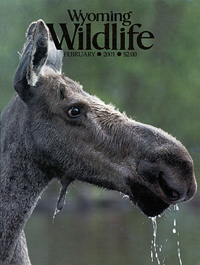
Amber Leberman gave the best presentation about submitting to magazines and how to keep your editor happy.  It was great! It was titled “Keeping Your Editor Gruntled.” Amber is the editor of the beautiful and august magazine Wyoming Wildlife. 

Afterwards we were urging her to write a book called Your Lazy Editor Loves You.  That was one of her main points: Your editor loves you.  She wants to love you.  Don’t make it hard for her.  Don’t be THAT WRITER.

For example, find out when he’s on deadline to go to print.  If you try to contact your editor on the week leading up to this, you’re going to get a very short answer, if any at all.  And, for heaven’s sake, don’t be that person who insists on continuing to talk.  When he says, “Sorry but I’m on deadline,” apologize and hang up. Deadline week is hell for them.


A lot of it is common sense ~ common sense that we lose when we’re wrapped up in our writerly agony. Query first ~ you don’t need to write on spec.  Don’t be difficult.  If the editor wants you to make edits, make them. Don’t be a prima donna. Get your stuff in on time. Make it your best work ALWAYS.  There are many reasons an editor rejects something, often not at all related to the quality of the work. Don’t take it personally. Be your best self. An editor will keep coming back to you if you do.

She was so charming and sensible in her presentation. She’s like, “Look. We want to like your work.  But we’re lazy, like everyone. Make it easy for us.” 

I am so stoked to get to know her and I can’t wait to hang out in the future and talk writing and herding cats ~ er, writers. She does a hard job and is amazing at it!

Here is Amber’s bio:
Amber Leberman is editor of Wyoming Wildlife, a monthly magazine for anglers, hunters and wildlife enthusiasts. She works with more than 50 freelance writers and photographers annually. Before coming to Wyoming, Leberman spent 13 years in various roles (including assistant editor, web manager and art director) with a nonprofit magazine group in Chicago, preceded by stints at Copley Press and the Chicago Tribune. She is an avid backpacker and fly angler.
Please check out Wyoming Wildlife and be awed!

June 5, 2012

Am I Crazy?


Via

I keep reading about writers who write a whole novel ~ blood, sweat, and tears ~ and then query something like 10 or 12 agents and then just throw up their hands and self-publish.  (Not that self-publishing isn’t one of the tools in our toolkits.)  I queried almost 130 agents on my first manuscript and something like 64 on my second before I got an agent. That was eleven years and two novels written and rewritten, not to mention getting published in litmags and going to conferences and setting up a website and so much more.

Query 10 agents and then give up?  What’s up with that?

You're going to need a lot of patience and sticktoitiveness to get anywhere, no matter which route you take.


Like this post? Click here to subscribe via email.

March 26, 2012

Are We Making Progress?


This last issue of Newsweek is fabulous!  It’s a double issue that is a throwback to 1965.  Everything in it is designed as if it were 1965 or about then or the difference between then and now.  All fascinating stuff, and don’t get me started on the delicious design of everything, most especially the advertising.  You should check out a physical copy of it when you get a chance.

I was especially interested in the Read All About It section, where they compare the Top 10 bestseller nonfiction and fiction lists of March 1966 with those of today. They list the books and tell a little bit about them, and then declare a winner, which presumably means the better book.

Some interesting things.  In March 1966, Truman Capote’s In Cold Blood topped the nonfiction list.  What a great book.  It was so stylish and well written no one cared that it was labeled nonfiction.  Barbara Tuchman, whom I love, was on the 1966 list, and Games People Play was number 5.  On the fiction list in 1966 was James Michener and Valley of the Dolls.

But what is even more fascinating is which books are declared winners.  On both nonfiction and fiction lists, seven of the 1966 titles were named winners, two 2012 titles, and one a tie or “reader’s choice.”  Now, I wonder why that is?  The only trends I could spot is that the books back then seemed to be bigger, about bigger issues or more about morality, while today’s books were very personal or self-help or, I don’t know, by zealots.  All of today’s fiction seemed to be about serial kills and CIA agents, while the 1966 fiction was about Nazi death camps or other big topics and/or very stylishly done.

So was 1966 the winner in these lists because people thought more deeply and more broadly and about bigger issues and thought about more than themselves?  Or is it because publishing has become more timid and narrow in their view of what they want to publish?  Or have writers been more concerned with what sells than about style?  Is the reading public getting dumber?  Or …? 

What do you think?  I'm really curious.

January 19, 2012

Myfanwy and I Hanging Over at All Lit Up

The lovely Myfanwy Collins and I pulled up a chair over at James Goertel's All Lit Up blog to talk about writing.  Myf talked eloquently about publishing and fear, and I went on ... and on and on ... about getting my agent. If you have a minute, check it out! Thanks, James!

June 6, 2011

Good News

You know, this publishing game runs so hot and cold. Half the time, you believe you are the worst writer on the planet and all you get back from the wide world is the sound of crickets. But sometimes ~ ah, yes, sometimes ~ some intrepid person sends back news that they accept you, that they love you, that what you write isn’t utter and total crap.

The writing game part is different and almost totally separate from the publishing part. Though it has its own exquisite pleasures and tortures.

So, I have good news! In addition to finishing the novel rewrite, I was accepted to go to Bread Loaf Writers’ Conference in August, and just today I received word that a short story of mine, “Dammed,” was accepted for publication by the lovely Lee Ann Roripaugh at the South Dakota Review. (If you don’t know Lee Ann’s poetry, you should definitely check it out!)

So, thank you, thank you from the bottom of my heart for making my day, my week, my year!

Question of the Day: How do you feel when you get an acceptance?

PS  The New Yorker Fiction Issue!!

May 4, 2011

Algonkian Writer Conferences

Hey, just a note for all you writers who have written a novel and are just starting to send out queries. Or, if you're where I was at one point ~ you've sent out a whole bunch of queries and are getting almost no response.  If you have the resources, you could sign up for an Algonkian conference.  It's not about the writing so much as understanding the market.  Feel free to email me with specific questions.

{added}

I wanted to add that Algonkian is about the writing too.  For me, the most important thing I got from the conference was that invaluable insider information, but you spend a lot of time talking about craft as well and where your book fits in the market.  It saves lots of valuable time if you consider, even before you're writing, what shape your book should take.  If you are writing a thriller, it doesn't matter how much you want to include a meandering plot with lots of literary backstory ~ if you want to be traditionally published, you had better know and stick to the conventions of your genre. 

While there, you do writing exercises and talk about craft and Michael gives personal feedback on your work.  It's great!

This is not to discount if you are writing to follow your own whims.  A very valuable undertaking.  But if you wish to publish, it's a good idea to know where you fit.

November 16, 2010

How to Write a Pitch Paragraph

It was so fun to do a pitch paragraph for the memoir pitch contest on the Dystel & Goderich blog! I find that I’m enjoying creating pitches a lot more now that I know a little bit about it. Before, I would throw up my hands and think to myself, does anyone really know how to write these things? The answer is yes ~ though I don’t claim to be an expert, I’ve done a lot of research and taken classes and helped a lot of other writers with theirs and even have gone to a whole conference devoted to figuring out how to pitch (Algonkian).

First I wanted to talk a little about the philosophy behind a pitch. No, it is not merely something agents do to make your life miserable (though it may seem like it sometimes). Hehe. It makes perfect sense of you think about how you tell stories and about how you evangelize books. So you read a book that you think is great and you want to tell everyone else about it. How do you do it? You start at the beginning and you tell them about the characters and a little about where it’s set and then launch into the plot. Sort of like you’d tell a story to someone sitting next to you on a barstool. You want to get across what a great story it is and why you liked it so much and also impress the person with your storytelling skill. (This, in fact, is a great exercise. Have a friend ask you what your story is about, and practice giving a couple of sentences as if you were talking about someone else’s book.)

The problem, of course, is that with your own book you don’t have the distance to simplify and essentialize it enough. To you, who worked on it for years and have thought of nothing else, it’s a complex being that is so much more than just what happens. But you know as well as I, if you tell someone what the book is about ~ the larger themes, the deep inner meaning ~ they’re going to be bored to tears. So you have to use all those great storytelling devices you use in your fiction: concrete details, specific language, lively verbs, cause and effect. You want a little theme, but not too much.

A big problem is that you have to simplify your story in your own mind, so let me urge you: you are only going to highlight the main storyline. ONLY the main storyline. Let me repeat … You only have a couple of sentences. One measly paragraph. You are telling only the main storyline. Also, two, maybe three characters tops. Add more characters at your own peril. You want your protagonist, antagonist, and maybe one more, but only if he or she is integral to that main plot. Of course, by simplifying the plot, it may feel like you’re misrepresenting the book, but it has to be done. We simply have to cope and move on about this. So, one storyline (the main one) and two characters, if at all possible.

So, you have a novel that is irreducible? Say it’s a novel in stories or some other experimental structure. Well, you’re going to have to do some research to figure out how to make it interesting while also talking about the bigger picture. Bigger picture often equals boring when that’s all you say about it. I guess the way to approach this is to ask yourself, what is the most interesting thing about this book, and focus on that.

Now we get to the actual pitch. A pitch needs to have everything that a great story has, only in a very short amount of space. It needs to have setting, characterization, plot, cause and effect, mystery/story problem, robust language, and larger themes. Always in present tense, of course. You’re not telling the whole plot ~ just the first one-fourth to one-third up until the first major turning point. You’re not aiming at resolution; you’re trying to get the reader to be hooked and want to buy your book/represent you.

So, a template: In [time period] [setting], [characterization of protagonist]. [Inciting incident followed by escalation/cause and effect to the first major turning point, while introducing and characterizing the antagonist]. [End with a problem that gestures to the larger themes of the book.]

Okay, this may not be the most helpful template, but it gets across how I think of it. Another tool that has been very helpful for me for both the pitch and the synopsis is this: Write your story as if it were a fairytale. You think I’m kidding. That was the only way I could write a synopsis and pitch for my last novel (Deep Down Things, which was from four points of view, each with its own character arc). So, here’s a fairytale hook:
Once upon a time, a sweet but plucky girl who wore a red cape and hood was tasked by her mother to take food to her sick grandmother, who lived on the other side of a dark wood. Her mother warned her not to go through the wood, but it was such a long way around and the wood did not look so dark and deep, so the girl decided to cut through it anyway. Little did she know, a whip-smart wolf awaited her, not simply to eat her up, but to destroy all that she held dear.
Not the best example, maybe, but you get the idea. It’s got all you need for a pitch: setting, characterization of protagonist, story problem, antagonist, larger theme. Try it, you might be surprised. Once you get that version down, then you rewrite it in pitch language.

The pitch/fairytale I created for my book (Deep Down Things) went something like this: 
In present-day Loveland, Colorado, a naïve but capable girl meets an idealistic young man who is a writer. As she helps him write a book, they fall in love, but things happen, as they do, and soon they are pregnant. Because the young man is idealistic, he blames the girl for not living up to his image of her, but also because he is idealistic, he asks her to marry him. They marry but then their darling baby, a boy, has a severe birth defect, and the girl must try to save her marriage and her child.
Once I massaged this into pitch language, trying to include more of the man’s perspective and a little theme, it became this: 
Nobody talks about the dark side of creativity. That the drive to create stems from loss. And, whether it’s a child or a book, some creations are destined to have short lives. From the death of her parents at sixteen, Maggie Jordan yearns for lost family. When she and an idealistic young writer named Jackdaw fall in love, she is certain that she’s found what she’s looking for. As she helps him write a novel, she gets pregnant, and they marry. But after Maggie gives birth to a darling boy, Jes, she struggles to cope with Jes’s severe birth defect, while Jackdaw struggles to overcome writer’s block brought on by memories of his abusive father.
Finally, I just wanted to point out just a couple other great resources on pitch writing. There are many more on the web, so lots of research is good.
  • Jane Friedman is doing a great series on her blog about novel pitches and query letters. Make sure to look around her blog and site - she has so many invaluable insights!
  • Miss Snark’s wonderful Cover Letter Crap-O-Meter.
And, finally, get feedback! Have your writer friends help you. If you find a contest on an agent’s blog, enter it. By all means, get help.

Questions of the Day: Do you know of any great resources on this subject? Please comment to let everyone know.

November 8, 2010

The Life Story (and Purpose) of a Literary Magazine

Way back before I published my first story, I thought to myself: What better way to get published ~ to get an in ~ than to start my own literary journal? I think a lot of people think this. And I have the utmost admiration for the people who follow through and create these great magazines, perhaps at the expense of their own work. I myself hesitated, and I think it was a good decision. If I were only creating a magazine for selfish reasons, they would be the wrong reasons, and if I had gone ahead, my writing would have suffered I think. I think you need to be a litmag editor for the right reasons.

So it really struck me this weekend when I came across the great Our Stories litmag and the thoughtful and insightful things written by its editor, Alexis Enrico Santi ~ particularly his “The Point of a Literary Journal.” I’ll summarize here, but please go read it for yourselves.

He begins (well, after the bit about puppy puke) by talking about how a litmag is formed:

You begin a literary journal with wild ideas and a few bucks. It is not hard to put together a journal, especially online, with the low cost of websites and ease of web design—throw together a name for your journal and a get an email address and you’re ready to go.

Then the pile of submissions quickly mounts and just as quickly the editor finds himself rejecting 95% of the submissions. Then something sometimes happens in the mindset of those enthusiastic editors. They become jaded and begin to resent the very people they are supposedly serving: the writers. He says,

And as your name gets bigger, you may begin to promise your pages to the best of the best, you set aside your pages for the friends of friends in MFA programs, for so-and-so who just won the Anchorage Writer Award, for whatshisface who just got a book deal with Penguin, for Johnny Appleseed who is dating someone on your staff. Soon the mass of submitters (if you play your cards right)—well you can ignore all of them—the slush pile can be used as last resort. This is the dream, right?

You see the problem? The slush pile becomes the enemy, and in reality, all those hopefuls who are submitting really have zero chance of getting in. Alexis points out that it would be good if journals would be totally honest about the chances of getting a story plucked from the slush pile.

Then Alexis talks about how, at MFA programs with litmags attached, the litmag readers are not supposed to do the very thing they do down the hall in their workshops, which is to give feedback. They’re supposed to turn it off and reject. As Alexis says,

As an MFA student, I no longer felt purposeful or that my skills mattered when working at literary journals. I did, however, feel judgmental and ultimately an authority. I was empowered to reject others and allowed to “have an opinion” and cultivated a sick pride of being a decider in the field of literature.

He ends with an excellent point: If you look at the site stats of an online literary mag, you’ll see that HARDLY ANYBODY is actually staying on the story pages long enough to actually read a story. If this is true, he says, then the people litmags serve are not the potential readers but the writers themselves. A very worthy manifesto:

This is the point of a literary journal: We exist for those who are submitting to the journal, and no one else. We exist so writers know that they are needed, that they are to be encouraged and have a place in this world. We exist to support and prop up the writer's themselves who submit to Our Stories, we exist to give encouragement (to those accepted and rejected) and to provide a very cool billboard for today's talented writers to park their work. We exist so that a wide populace of unemployed, underemployed--very talented--highly educated reviewers of literature, schooled in the art of providing feedback to someone can practice their skills of reading and reviewing. Maybe we even exist—just maybe—we exist so that these talented staff members can do something as crazy as earn a paycheck to put their skills to use? That’s why we exist, that’s why what we do at Our Stories matters as it is a humanizing system.

Please go read it for yourself. A very thoughtful piece ~ and revolutionary, I thought. (And, Alexis, why aren’t you on Facebook so I can friend you?!)

Questions of the Day: What do you think is a purpose of a litmag? What do you think the system needs to be “fixed”?

November 4, 2010

Justifying Plagiarism

What I’m Reading Today: Haven’t had a chance - too busy. Very sad.

Small presses and litmags are the lifeblood of our literary culture. They really are. All those selfless individuals putting all this energy and time without any hope of reward besides, hopefully, reading some good work. They are the yin to the yang of big presses and established litmags. They shake things up, keep things moving forward, give encouragement and support to us newbies.

And the amount of shit they have to put up with. I can’t imagine. They have the pressure of doing as good as they can with little resources. All I can say is that they must let their personal lives slide sometimes, and those who teach and write also? Gosh, how do they do it!?

But (you knew this was coming) I recently heard two stories that were disheartening. One, I was talking with a friend of mine. A small publisher published her collection of linked short stories. He chose the cover art, did the design, etc.  It was a beautiful edition with beautiful cover art. Now, a couple of years later, she gets an email from the artist who did the art on the cover in very formal language saying, this is my art, you stole it. Of course, my friend is mortified. She immediately contacted everyone involved, explained the situation, and had everyone take down the book, as well as she could. This publisher has also recently been under allegations for plagiarism.

Second story is here. A well-established cooking magazine totally plagiarized someone’s work and included it in their magazine. They used her byline but never contacted her or anything. She found out about it and sent them a letter. The editor or whomever basically chewed her out for being upset and blamed her for it. The editor said, “You should compensate me!” quote unquote. How outrageous!!

With so many people out there working so hard for the common good, for the higher purpose, it’s people like this who just ruin it for everyone. How can anyone who’s in the creative business think these kinds of things are acceptable? What about common decency?

Rant over.

Questions of the Day: Have you had something like this happen to you?

September 22, 2010

Promotion and Rejection

What I’m Reading Today: More Sherlock Holmes.

Have I mentioned that I can be a little obsessive? Once I get a bee in my bonnet about something, I spend all my available time trying to accomplish it. Lately, that bee has been all those promotional and social networking things a publisher expects of its authors. I haven’t gotten to that stage yet, but with any luck I’ll be there soon, and these efforts are a lot more successful the further out you start them. So I’ve been doing all this research ~ a bunch of online stuff and reading a bunch of books.

But what I really want to do is write. I want to be writing my fiction! I’ve started revising a novel I wrote a while ago, and I was in a sweet spot ~ got a whole new take on it, a luscious voice and a couple of great points of view and I’ve already worked out the plot. I was making great progress.

I miss it.

My husband, that very smart man and a wonderful iconoclast, said that I was going to miss that time when I was just writing without the pressure. But, you know, if serendipity comes your way, you need to take full advantage of it. Who knows? It may be your only shot.

With that mournful lament, I thought I’d pass along this great bit I read yesterday in the inestimable M.J. Rose and Angela Adair-Hoy’s book How to Publish and Promote Online. This is from M.J. Rose’s chapter "Last Words":

Like it or not, people say no more than they say yes. But when I started out on my own in the publishing business I got paralyzed by the first few dozen no’s that I heard. Rejection is tough on even the most self-confident person. …

So I was telling a friend, who is a professional fundraiser, about my dilemma. She laughed and told me that in her business that the no’s are a good thing. “For each no you are getting closer to a yes,” she said. She even had a mathematical equation she’d worked out from ten years of experience. She had to get fifteen no’s to get a yes. And since she was asking for contributions for a worthwhile charity, her no-to-yes ratio would be lower than mine would. I could count on a thirty-to-one no-to-yes ratio.

So I started to tally the no’s.

In the first two weeks I got ten no’s.

In the second two weeks, twelve no’s. (I was starting to get excited, twenty-two no’s down, only eight to go. Finally, after six weeks and thirty-four no’s, I heard one wonderful, resonant yes. These no’s and yes’s were about getting a major reviewer to read my self-published novels.)

A funny thing happened to me in those weeks. I went from dreading and hating the no’s to understanding something about them. They represented hard work and determination on my part. I was proud of those no’s. Plus, the no’s were important. They weeded out the people I really didn’t want to review the novel anyway. Only someone who truly was open to the idea that a self-published novel could be any good was the right person to read it.


Yes! She so eloquently says something I’ve long thought. Being successfully published is a process, and no’s are a sign of progress. In fact, my husband congratulates me every time I get a no (a rejection) because it’s something to celebrate. (It all goes along with my haystack theory of publishing).

Did you get rejected today? CONGRATULATIONS! See it for the forward momentum that it is and go celebrate!

Questions of the Day: What do you think about authors promoting themselves? Are you old-school and think they should focus only on the writing? And what about rejections? How do you handle them?

August 31, 2010

Lying to Yourself and to Others

What I’m Reading Today: Seth Godin’s All Marketers Are Liars.

I am rapidly becoming a Seth Godin devotee. I started paying attention to his writing when he decided, like an increasing number of established authors, to go it on his own without a publisher for his next book. I read a bit of his blog and just now finished All Marketers Are Liars.

Marketing is one of the things I do for my day job. I used to do it freelance, and now it’s part of my job as an editor for a foundation. So I have thought a bunch about it and I’m always looking for ways to better connect with people.

I’ve long thought that an effective marketing technique, depending on the audience, is to tell a story. It has to be a good story well-told, granted ~ and a much abbreviated story.  You have to use the techniques of good storytelling. Use the five senses, clarity, the significant detail, a compelling narrative. You can’t generalize and you have to tell, rather than show, as much as possible.

The subtitle of this book is “The power of telling authentic stories in a low-trust world.” This subtitle seems in contradiction to the title, but as Seth explains he was actually lying in the title, or at least stretching the truth. Marketers actually have to tell a true authentic story ~ they can’t lie, and they have to believe what they’re saying. It’s the consumers who are actually lying, and they are lying to themselves. They desire something, they have a certain worldview, so they buy the stories that align with their desires and worldview.

What you have to do as a marketer is to choose your audience and choose your story. You need to choose an audience with a certain set of values and desires and suit your very-well-told story to that audience. You can’t try to reach everyone because your story has to be specific and concrete and appeal to a group of people. If you reach a specific group of people with a great story, they will tell their friends, who will tell their friends, and so on.

This all got me thinking about book marketing. As a novelist (or nonfiction book writer), our product is our book. So ideas, a worldview, is our product, so we need to sell our worldview, or that of our books, to a certain group of people. Not only the story we tell has to be compelling, but also the story about the story has to be compelling. We have to tell an authentic well-told story about the book that is the story.

I was thinking that that’s where the author’s origin stories come in ~ how they became a writer, what’s interesting about them. That’s why we need a website and a blog. We need to keep telling our authentic story. Also the origin story of that particular book. That’s also why readers want writers to be the characters in their books. Authenticity. They want Hemingway to be Jake and Henry and Macomber and the old man. They want Tolkien to be Bilbo and Frodo. They want to touch that elusive physicality of the Grail.

So, I’m going to be thinking more about the story of the story (of my novel). Also, I’m going to be reading more Seth Godin!

Questions of the Day: What’s your story about the story? Do you think an author’s work should stand on its own? Or do you think the author’s life is relevant?

August 3, 2010

“Literary”

What I’m Reading Today:  Technical documents.  Been doing a little freelance work.

Today, I wanted to riff on the term “literary.” I hope I can be coherent about it.

We all want to write well. For some of us, that means we call ourselves and what we write “literary.” We want prose that people read and go, “Ah. Wow. That is a well-turned sentence.” To us, the term “literary” is synonymous with “well-written.”

Definition 1 ~ Literary = well-written.

An extension of this is a writer who is a step above the average writer. Someone who has mastered their craft. They’ve put in their 10,000 hours. They’re up for awards because of their prose. They are the experts.

Definition 2 ~ Literary = masters of the craft.

Fair enough. I think everyone can agree that this is often the first thing that comes to mind. An extension of this, though, is that literary writing often draws attention to itself. The reader is not only marveling at the fabulous story (we hope); he or she is also marveling at the dexterity and craft of it. They’re reading for the pleasure of the metaphor and allusion. They are keeping half an ear on the resonances and the quality of it.

You might think this sounds fabulous, and it is, but as everyone knows there’s a dirty underbelly to all this. If the only thing the reader is paying attention to is the Latinate flourishes of your pen, they probably care a lot less about your characters and your story. This is what some people criticize about MFA programs ~ it trains writers who are very good but who could care less about plot. The criticism goes that they’re so focused on showing you their stuff that they fail to connect on a very basic story/heart/desire level. The reader is always being pulled out of the story.

Definition 3 ~ Literary = overwritten and self-conscious.

So the problem comes when you, the writer, who wants to come across as someone who knows her stuff, have to label your book for the publishing world. You think, damn it, I’ve put in my time, I write well {at least I hope I do}, so I am going to claim it, own it, and call myself “literary.” This is an assertion of confidence, sometimes wobbly, sometimes well-earned. Well, all the other writers out there are also trying to get their stuff published, and they’ve put in their time, and damn it they’re accomplished too, so they call themselves “literary.” Especially if I’m feeling a little unsure of myself, I’m going to put that in there. So, often, people who are just starting out, who in fact haven’t actually put in that much time ~ though to themselves their words come trippingly off the tongue and they can’t see any other way to fix it ~ they label their work “literary” because they want to assert that it’s well written. So in this case “literary,” meaning “well-written,” is possibly a little further away than the writer hopes.

Definition 4 ~ Literary = a fairly inexperienced writer claiming the territory of “well-written,” though this is often not the case.

You see the problem? Agents (and editors) see a writer claim “literary,” meaning “well-written,” when in fact the manuscript has a way to go, either because the writer has not yet learned his craft or because he impatiently sent out a first draft that was not fully developed yet. So, in this case, the term “literary” becomes a sign of an amateur. This is why I advised people to avoid this label in my checklist of things that may signal amateur to publishing professionals. If you do this and one or two other things, the agent will write you off. Understandibly.

Definition 5 ~ Literary = amateur.

What do you call your work instead, you ask? Well, that’s a tough one. I opt for the term “women’s fiction” for mine. I think going with a category like this is much safer. You could call it “book-club fiction” or “upmarket fiction,” which means well-written commercial fiction. And of course the problem is you have to label it something because you have to show some knowledge of publishing. Another way to get around it is to say “a novel in the vein of Richard Price” or “a novel comparable to Marilynne Robinson’s Housekeeping and Jim Harrison’s novella Legends of the Fall,” or something like that. (NEVER “a fictional novel,” since this is redundant and agents see it way too much, they say.)

Genre fiction is the cash cow of the fiction publishing world. It’s the closest thing to a safe bet, they say. Literary is a huge gamble. Eric at Pimp My Novel gives an absolutely terrifying report about literary fiction. And with the publishing landscape changing so quickly, it may be an even bigger gamble in some ways. (Will the readers who like literary fiction be the last ones to move to the new, cheaper platforms?) So, in this case, the term “literary” is a big detriment. It’s like putting a huge L on your forehead. Look at me, I won’t sell more than 500 copies.

Definition 6 ~ Literary = loser.

The problem with literary as a category is that it not easily classifiable. With romance or scifi or historical fiction, you tend to know what you’re going to get. That’s one of its draws. It reaffirms received notions (not shake up preconceived notions, which is what literary fiction often does). It’s like your favorite meal at your favorite restaurant ~ you love it just as it is and you don’t want it to change. That’s why it’s easy for readers who want genre fiction to go into a bookstore and know what their getting. They want romance? They go to the romance shelf and pick one out, and the author’s name is a lot less important. When you’re a literary author, your name is your genre, and you have no one who has built up your genre before you. You’re starting from square one. It’s going to take a long time for you to build an audience, while for genre the audience is already there and is lining up rabid to buy the next book. So literary as a genre is a much more slippery thing. Beyond it being well-written, it’s really hard to define.

Definition 7 ~ Literary = a genre without coherence; you don’t know what you’re getting unless you’ve read this author before and liked them.

Finally, here’s AgentQuery.com’s great definition of literary ficton:
If you marvel at the quality of writing in your novel above all else, then you’ve probably written a work of literary fiction. Literary fiction explores inherent conflicts of the human condition through stellar writing. Pacing, plot, and commercial appeal are secondary to the development of story through first-class prose.

Multi-layered themes, descriptive narration, and three-dimensional characterization distinguish this genre from all others. Literary fiction often experiments with traditional structure, narrative voice, multi-POVs, and storylines to achieve an elevated sense of artistry. Although some literary fiction can become "commercial" by transcending its niche market and appealing to a broader audience, this is not the same as commercial fiction, which at its core has a commerical, marketable hook, plot, and storyline—all developed through literary prose. Literary fiction often merges with other fiction types to create hybrid genres such as literary thrillers, mysteries, historicals, epics, and family sagas.
Questions of the Day: Do you have any additional definitions to add? Do you disagree with any of mine? Are you in the literary camp, or the genre camp, or both?

July 27, 2010

How I Got My Dream Agent, Part 2

What I’m Reading Today: More Bone Fire.

In part 2, I wanted to talk about what I feel made the difference in my search for an agent. Many of these are things that people have been saying for ages, but I have also found them to be true. Please take them with a grain of salt ~ these are things that helped me. I hope it helps others.

In General

Not one big thing. In my experience, it wasn’t one big thing that got me an agent but, instead, a whole bunch of small things. This means, in practical terms, that we just need to keep trying different things, keep doing research and brainstorming, keep learning, keep putting it out there, keep bouncing back. Boy, do I wish there was just one big thing!

Perseverance. The number one thing, I think, is perseverance, perseverance, perseverance. Sheer pigheadedness. I mean, we're ambitious, right?  That's why we're still here.  Maybe it’s just my take on the world, but a large portion of my success (in anything) has come from just being there, showing up again and again, keep putting it out there, finding new solutions or work-arounds. I mean, it took me eleven years! And, while getting an agent is a milestone, I know that it’s just another beginning.

Patience. Sort of a corollary to the last item. The publishing industry is notoriously slow. It all takes lots of time. The more ways you can find to make yourself patient, the better. It always helps me to have a number of irons in the fire. That way, when I get rejected, I have other things to look forward to. It’s all part of my Haystack Theory of Publishing. Also, if you’re sending an impatient or angry followup email, that’s not going to help your cause. I believe in following up ~ the squeaky wheel gets the grease, after all ~ but I think we should be on our best behavior when we do. To give you an idea, one of my partials was out sixteen months before I signed with Rachel, and I’d followed up three times.

Follow up on every opportunity. You know how serendipity will hand you something, and you’ll mean to follow up on it. Say your husband’s best friend is married to an agent. Or you start talking to someone in a bar who loves your book idea and says she’ll send it on if you send it to her. Follow up on it, dang it! Don’t let it pass. It never hurts to ask. Let me give you some examples. I recently read that 9 out of 10 authors fail to return their promo questionnaires ~ a huge missed opportunity. I volunteered at an archive that had a notable author in my genre who was a board member and an active researcher. I asked my lovely friends there if they would forward an email to her. I asked my workshop teacher and mentor to recommend me to her agent. I sent queries for my second book to all agents who included personal notes on their rejections to the first book, mentioning that I much appreciated their kind words.

Jump into online media and social networking with both feet. In industry jargon, creating a platform. You should create a website and/or a blog ~ now, don’t wait until your book is coming out ~ and be on Facebook, Twitter, MySpace, and other places. I’m convinced that this is one of the reasons my agency was interested in me. I showed I was capable of being a promo-sapiens. And it’s an ongoing commitment. If you create a blog, you can’t not write for weeks and then announce to the world, “Oh, look, I have another blog post up!” No. You have to blog at least every other day, five days a week. It’s a commitment. Also, keep your website current. Be a good Facebooker ~ don’t just talk about yourself. Interact. Comment and promote others and enjoy it.

Making lots of writer and editor friends. AKA networking. But I don’t think of it in those terms. I just love being able to rub antennae with other geeks just like myself. I don’t think of others as competition. I think of them as a great big groups of fun people who I loved to connect with. But, in practical terms, this also pays off for your career.

Go to conferences. This pays off in so many ways. You improve your craft. You make friends. Your spirits go through the roof. And it gives you so many opportunities in the searching for an agent game. You can pitch agents at conferences. Even if you don’t pitch an agent, you can mention in your query letter that you saw them speak at such and such a conference but that you’re sorry you weren’t able to sign up for a pitch appointment with them. If they give a talk, you can mirror back to them what they said. I went to a conference, and the agent talking said he liked Cormac McCarthy and also was looking to take on women’s fiction. Well, I could say that my style is in the vein of Cormac McCarthy and that I write women’s fiction, as he mentioned at the X conference.

Get published in literary magazines. This sounds like an old saw, but it’s true. Not only does it get your name out there and increase your platform online, agents read them. It helped me keep Rachel interested, and I also received an invitation to submit a manuscript to a fabulous big-name agent. I was not able to follow up on this fabulous opportunity, as he requested an exclusive, but it was worth it in ego points alone. Who doesn’t want to hear that someone else liked their stuff?

Get an MFA. I don’t have an MFA, but I have friends who do. It paves the way like nothing else will, especially if you go to a big-name school. In some cases, agents come knocking at your door. I have a friend who went to a top-rated MFA program and then also attended a top conference every year. Without sending out a single query, she had her pick of four or five agents for her short story collection, and this with having only two or three stories published.

Learn about the industry. Read agent and editor blogs. Listen to agent interviews. Obsess. Do research on AgentQuery.com. Get a subscription to Publishers Lunch at least, if not Publishers Marketplace. Lay awake nights and wonder what you’re doing wrong.

Be polite. Don’t be the difficult person. Be persistent, but be pleasant.

The Manuscript

Revise, revise, revise the manuscript. It needs to be as perfect as you can possibly make it. Resist the urge to send it out immediately upon finishing the first draft. Resist mightily. Find as many ways to polish it as possible. I wrote and revised my first novel for six years. I wrote and revised my second novel for four years. For suggestions to help revising, see the following.

Read craft books. I can’t tell you the number of great things I’ve learned from craft books. Halfway through my first book, I stopped and thought, “I have no idea what I’m doing.” Then I read a gazillion craft books. I still read and reread them. It helps.

Get feedback on your writing through friends and critique groups and workshops. Prevail upon your friends. It’s nice to have your family tell you how good it is ~ we all need that ~ but it’s more effective in craft terms if the feedback is from another writer. If you have a critique group, great! Or take a novel workshop. Or take an online workshop. Or go to a conference that has a novel workshop. Get feedback on it as much as possible.

Have a professional freelance book editor give you feedback. Preferably one who has been in the industry. If you’re going to pay good money (as much as $2,500 for a good one) for a book doctor in order to get published, make sure that editor knows about publishing. If you’re just looking to get feedback on craft, that’s great. It’s fine to pay a writer who’s also an editor. But if you’re trying to work toward publication, it makes sense to get an editor who knows about publishing. I plan to use my freelance book editor for all future books, hopefully before I send it to Rachel (depending on my finances).

Things in your manuscript that put up a red flag for agents. Every writer goes through a natural progression of learning craft, and there are craft things that mark you as someone starting out. I think you can get away with one or two of these (calling your writing literary, one misspelling), but they add up quickly. Click on link at the beginning of this paragraph for an elaboration.

Sometimes it’s time to move on. Sometimes, you’ve learned everything you can from a book and it’s time to put it away and move on to another one. They say it usually takes two or three or more book manuscripts to get an agent. There came a point when it was time for me to move on from my first manuscript. Now, going back, I can see its flaws ~ though I couldn’t at the time ~ and I’m planning to rework it.

The Query Letter

Do a whole bunch of research on writing a great query letter. It is the most exacting genre there is next to the resume. One word will make the difference between getting a request and not. There’s a lot of great blogs and resources out there. Take advantage of it. Read Miss Snark’s query letter Crap-O-Meter ~ she commented on something like 99 query letters, talking about what was working and what wasn’t. I’d pay special attention to the ones in your genre.

Revise, revise, revise. When you’re not getting requests for partials and fulls, revise it some more. Still not? Revise some more.

Get feedback on your query, preferably from other people who’ve been trying to query or people in the industry. I went to a whole conference devoted to crafting a query (Algonkian), and I posted mine on an agent blog who was having a contest to give feedback on queries, where mine won a spot and received feedback. I also asked the freelance book editor who went over my manuscript to also go over the query letter.

Some basic stuff. Use her or his name. “Dear Ms. Smith:” Do not mass email to a bunch of agents. Do research on whom you’re sending to. Personalize each query. By that, I mean, read their website and any interview and somehow mention something very specific that they said. Use their wording. Think about it: You’re trying to seduce this person. You’re looking to get a partner for life, much like a marriage partner. Is quantity going to get you into someone’s heart? Nope. Quality. Personalization. Making a connection.

Check your spelling. This seems like a no-brainer, yet agents say that they get queries with lots of misspellings.

Don’t try to be cute or funny. You may feel a connection to an agent because you read their blog, but do not give in to temptation to be funny. Business formal only.

Previous connections. Mention right away if you have a referral, if you had them in workshop, if you went to a conference they spoke at, if they included nice words in their response to a previous submittal, if they are your cousin’s inlaw.

Follow guidelines. For each and every query, read their guidelines on their website and follow them to a tee. Also, you can get a lot of good information on AgentQuery.com.

Play by the rules. Don’t be that guy who thinks that breaking the rules will get you in. It won’t. It’ll just irritate people.

I’d recommend sending queries out in batches. Maybe ten at a time, every month or two. Aim your query high and low. New agencies and new agents at established agencies are good places to query for new writers. Subscribe to Publisher’s Marketplace and sign up for Publishers Lunch Deluxe and pay attention to the announcements for new agents.

Follow up politely. Give them the amount of time they state on their website. Or, if they don’t state it, I’d give them three months for a query, four months for a partial, and six months for a full. Repeat (politely) until you get a response. Don’t take it personally.

When is it time to give up? I don’t know. I think some people would’ve given up way before me. I queried 128 agents on my first manuscript and 62 on my second. Maybe that makes me a slow study. Like I said, pigheadedness is sometimes my greatest asset.

I hope this helps! You can do it!

Questions of the Day: What do you think? Do you disagree with anything I suggested? Anything you’d add? I’d love to hear from you!

July 23, 2010

How I Got My Dream Agent, Part 1

What I’m Reading Today: Lots of websites and things about social networking and platform.  I miss fiction.

Big announcement!

I signed with a literary agent this week! The lovely Rachel Oakley at Dystel and Goderich Literary Management. I am just so thrilled! It’s been eleven years in the making.

(Since this initial post, my agent as D&G has changed to the lovely Sharon Pelletier.)

I thought I’d make this a two-part post. In today’s post, I’ll tell the story of how it happened. Monday I’ll report on SSFD, as usual, but then Tuesday I’ll try to pinpoint the things that made a difference in my search. So, without further delay …

Once upon a time, way back in 1999, I started writing my first novel. It was the summer between graduating with my undergraduate in English and starting grad school. After timidly taking my first writer’s workshop, I had convinced myself that maybe, just maybe, I had it in me to write one.

This first novel, Earth’s Imagined Corners, is women’s fiction set in 1885 Iowa and Kansas. It’s the story of Sara, whose father tries to marry her off to his younger partner, only she elopes with a kind man, James, whom she just met and who, though she doesn’t know it, just got out of prison. It’s based on the lives of my great grandparents.

It took me six years, until 2005, to write the first draft. I would write furiously for two weeks, a month, and then life would get in the way or I’d come to a hard part. Then I’d put it aside. Once I had a complete draft, I got some friends to read it, and then I revised and revised until I didn’t know what else to do.

I crafted a query and started sending EIC out in November of 2005. In a testament to optimism over stark reality, I sent it out to almost a 130 agents, plus about 20 small presses, with minimal response. By minimal, I mean only one request for a full and maybe a couple of requests for partials. I know now that my query letter wasn’t that good and that the first pages of the novel had red flags ~ switches in points of view, boring scenes, an unlikable character, and other things. One very kind agent in Canada requested a full and wanted to take me on, but her partners didn’t agree. She asked for an exclusive too ~ so long months of waiting. I finally gave up on this book in 2007, but you’ll be happy to know that I’ve resurrected it and am now deep in revising it and making it sparkle like sunshine on water.

In the meantime, I’d moved on with writing. I’d also been writing short stories, which really really helped me with craft. Then, in August of 2005 I started the current novel, the one that got Rachel to fall in love with it. It’s called Deep Down Things (at the moment). Set in present-day Loveland, Colorado, it’s about a naive young woman Maggie who falls in love with an idealistic writer named Jackdaw. She helps him write a book, and they get pregnant and then get married. However, because Jackdaw is so idealistic, he doesn’t respect her because of it. Then they have a baby boy named Jes who has spina bifida, a severe birth defect. Maggie tries to save her marriage and her baby. It was inspired by something a friend went through.

I finished the first draft in March of 2007, so a year and a half. I had a great deadline ~ I wanted to do a mentorship on it at the Tin House Writers Conference, so a lot of it was written in the early months of 2007. I don’t know how but I landed a great mentorship there with an editor at a big New York publishing house. She was so kind. I have to say, at that time, the manuscript was in sort of a mess ~ first person in four points of view and also two different time frames going concurrently ~ but she pointed out what was working on a large scale and on a small scale and what could be changed. “Do more of this ~ characters not just in the moment but also reflecting on what it means,” she said. “Even though you’re in first person, it has to be a little more toward third person. Less asides.”

I wrote and revised. I kept the four points of view but made the narrative linear. I made sure each of the characters had his or her own arc and distinct voice. Because of my initial structure, I had the beginning and the end written but not the middle. I took the book to a couple of more conferences and got more advice. I revised. I made connections with editors and agents and writers. I went to the wonderful Algonkian Writers Conference, which is all about figuring out publishing from an agent’s and editor’s point of view and looking professional and honing your pitch. Heck, it’s about basic things, too, like making sure you know what genre you’re in and you’re sticking to those conventions. Michael, who leads that conference, gave the name of a kickass freelance editor who used to be an in-house editor, and she went through the novel again and gave me the full editorial treatment. I urged her not to spare my feelings ~ tell me what’s working and what’s not. She did such a great job, and I paid her a lot of money but not as much as she deserved. (Many things in this process, like conferences, cost a lot of money.) I revised and revised, including changing the title (it was called Loveland) and the ending.

In March of 2009, I started sending my query out to agents. I started with top agents and agents who represented things like what I write. I immediately got requests for partials and for fulls, but then they all came back with “You write really well, but fiction is a tough market right now.” I received invitations to submit my next project. I kept submitting, ten to twenty agents at a time, every month or two. I kept my ear to the ground and submitted to newly established agents and agencies. I also followed the great advice of submitting to new agents at established agencies ~ I have a subscription to Publishers Marketplace, so I scanned that every day and collected names and submitted to them. One of those new agents was Rachel.

I submitted to Rachel on January 8, 2010. She requested a full on January 14. Then, the evening of Friday, February 19, I got this fabulous long email from her. I read along and she said all these wonderful things about it and I kept reading, waiting for the “but …” The but never came. She suggested some changes and said she’d love to see it again. Over the weekend, I addressed all her changes and sent it back to her on Monday. As she reviewed it, we exchanged friendly emails about other things, at her initiation. She took another look at the manuscript and then had some other agents take a look, but then on March 25 she rejected it! I had started to become convinced that she was The One, and it was kind of heart-breaking. She was so encouraging and wonderful in her rejection email. But I understood why she had done it ~ as everyone was saying, it’s a hard market for fiction right now, especially literary fiction. I sent her an email saying that I’d much appreciated her enthusiasm and I understood. That was that ~ so I thought.

Then in late May, Rachel emailed me to say that she’d come across a story of mine that was recently published and that she really liked my writing. This begins a great series of emails about what we were reading and about cowboys and the West and her being from Australia, once again at her initiation. I really enjoyed our conversations, and of course it was balm to my craven writer soul, but I didn’t really think that anything would come of it. Then, she emailed that she’d been talking to the primary agents in the agency, Jane and Miriam, and they’d read my website and liked my voice. Would I send the full again? Of course I would! Throughout this process, Rachel kept me updated with small emails saying they hadn’t forgotten about me. She got back to me when she said she would.

Then, on July 15, Rachel emailed me to say that nothing was definite but that they might have some very positive news for me. AACCKKK!! But, you know what, at this point, I really wasn’t believing it. I was so hoping, but I didn’t think it would happen. Then, last Monday morning, Rachel called and offered representation! I accepted of course, after emailing the other agents who had partials and fulls. I couldn’t be more thrilled and honored!

Rachel is my dream agent because she is so smart and so enthusiastic about my work. She’s responsive and professional and part of a great agency that’s helping put out such fabulous books. I am so lucky.

Questions of the Day: What’s your agent story? How did you get your agent? Have you had some close calls? Are you just starting out?  I'd love to hear from you, so feel free to add your comments!

May 28, 2010

Setting Up to Fail

I just love TED. It stands for Technology, Entertainment, and Design, and its site has online 20-minute talks by thinkers in all fields that talk about ideas. It is phenomenal. So much of what you get on TV and the internet nowdays is about celebrity; this site is about thinking.

Yesterday, I watched this amazing talk given by Larry Lessig, who is a lawyer and professor whose passion is copyright and the internet. His talk on laws that choke creativity here gave me so much to think about it’ll be on my mind for days. Let me try to explain.

Larry began with three stories leading to a point:
1) In the early 1900s, musician and composer John Philip Sousa traveled to D.C. to protest the phonograph because he was afraid that it would replace the actual singing by actual people ~ in other words, change our culture from a read-write one to a read-only one. Larry points out that that is exactly what has happened. We are a society of consumers of art and culture, not creators. Culture has become top-down and professionalized and the vocal cords of millions have been lost.
2) It used to be, when you owned property, you owned it from way deep in the ground on way up into the sky, but that changed when planes began to criss-cross the country. Judge Blackstone ruled that it did not make common sense because a transcontinental flight would trespass on millions of people’s land.
3) In the early 1900s, the organization ASCAP controlled the rights to all the most popular music, and then an upstart BMI came along and set up a service that took the music that was a little less popular and made it available more freely. In that battle, BMI won.

What Larry advocates for is the revival of a read-write culture, for people taking their voices back on internet platforms that support user-generated content (or usg). Specifically, places online where content can be used freely for amateur use but must be licensed for business use. What these platforms do, he says, is celebrate amateur culture. This does not mean “amateurish”; it means people being creative for the love of it, not for the money. He showed three great examples: 1) serious vampire anime set to the muppet song “Ma Na Ma Na,” 2) Jesus singing Gloria Gaynor’s “I Will Survive” through the streets of NYC, and 3) cleverly arranged clips of President Bush and Prime Minister Blair dubbed to the duet “Endless Love.”

The techniques of creativity have been democratized, Larry says. All you need is a home computer, and you can create whatever type of content you’d like. He called it “remix.” I love this: He said that it is “the literacy of this generation.” He ended by saying that our kids really are growing up in a different world. Where we are consumers of culture, they are creators. We listened to music, they create it. We watched movies, they create them. We read, they write.

However, the legal system as it is set up creates the presumption that what our kids are doing is illegal, that using content in this way is piracy. The internet is not like previous forms because each use creates a copy. Pre-internet, copies were piracy, but now, just to use something you create a copy, and that should not be considered piracy.

His final point was that we are creating a prohibition society, where in order to live we have to live against the law. Our kids are growing up with the presumption that they must be pirates in order to live.

Without making this post too much longer, I wanted to point out a few things as it relates to writing: 1) The internet has enabled writers to put their stuff out to audiences without a middleman ("disintermediation"), which means both that we are overwhelmed with content and that there are no gatekeepers ~ in both the good and the bad sense. We have control of our own voice. 2) This is exactly what is causing so many challenges in the publishing industry. 3) Remix, or mash-ups as they are called in the lit world, is not just a passing fad; they are a fact of our culture (though I would argue that they have always been around). 4) It both thrills me and scares the daylights out of me to think about how this affects my son and my daughter.

What I’m Reading Today: Started Alan Bradley’s The Sweetness at the Bottom of the Pie for book club. Oh, how I wish I could’ve read this when I was 12! It reminds me, so far, of Dodie Smith’s I Capture the Castle, although the spunky voice reminds me of Charles Portis's True Grit.

May 14, 2010

To Make a Long Story Longer

The best thing happened to me yesterday! I opened my mailbox and there was a nice hefty manila folder inside. I always love getting literary magazines in the mail, and I get a lot of them. The first thing I do is search the list of names on the back cover or in the table of contents to see who I know who’s in it. More often than not, there’s someone, and I get to brag about them on the blog or on Facebook and email them or post on their Facebook page: You rock!

Yesterday, it was me in that list of names! My story “The Body Animal” came out in Talking River Double Issue #27/28. I am so thrilled. (You can only read it in hard copy, though, so order today!) The reason I’m mentioning it, other than shameless self-promotion, is because this story has had a long history, and I thought I’d tell you about it.

I wrote the story in 2003 shortly after grad school. I remember starting it on the computer and getting stalled, so then I went to the library with a notebook and I wrote through to the end, the last three-quarters of it, in one sitting. I revised it, and then I was in a writers group at the time and they read it. The comments I got back were: “Wow, this is really dark” and “The girl in this story has some sort of mental disorder.” I have to admit, in a long history of dark stories, it’s probably my darkest.

Then I began sending the story out in 2004. The first place I sent it was the New Yorker. Now, don’t be shocked, and I’m going to resist being embarrassed as I say it. It all goes back to my haystack theory of publishing ~ I didn’t expect it to be published there, but it’s part of the process of letting people get used to your work. Also, Deborah Treisman said in an interview that she doesn’t get nearly as many submissions from women as men. I say: You’ve got to have hubris to be a writer. You won’t believe it though ~ I got the “despite its evident merit” email on the story! (In recent years, the line “despite its evident merit” has been revised to “in spite of its evident merit.”) This note has sustained me through dark times, let me tell you.

Between 2004 and 2008, I sent the story to 22 places. Of the 22, eight were form rejections, five asked me to submit something else in the future, two included nice notes, one was an acceptance, I withdrew five, and one I withdrew but then they sent me a note asking me to submit in the future.

These were the nice notes I received. Sean Meriwether of the now-defunct but wonderful Outsider Ink very graciously told me, “Closer than the last. I look forward to the next.” The Missouri Review, who’s sent me so many wonderfully encouraging notes, said, “Although we could not accept your work at this time we did enjoy the concept you explored with the body/self conflict. We especially liked the line: ‘As if the self and the body were the same thing.’"

Then one day in 2008, like many other days, I opened the mailbox and there was one of my little SASEs. A rejection. I opened it and, no!, it was an acceptance, a form letter that said, “Talking River is pleased to accept ‘The Body Animal’ for publication in a future issue of our journal.” Woo hoo!

So a year went by and I hadn’t heard anything. So I emailed Talking River. Nothing. There’s no phone number on their website, so after talking with a few people at Lewis and Clark State College I tracked down the number for the editor and we talked. He was very nice. Apparently, there had been an editor previously and things had gotten way behind schedule. The current editor thought that my story would be out in the fall of 2009, if I still wanted it to be published in Talking River. Needless to say, I did. Bird in the hand, and it's a great mag!

Still nothing. I called back in late 2009. The editor said that he was very sorry. They were trying to catch up. It would come out in the spring of 2010 in a double issue. So I’ve been waiting by the mailbox for it, and here it is!

A funny side note. I was telling my friend Chavawn, who’s also a fiction writer here in Laramie, the story, and she said, “That exact thing happened to me too!” A story was accepted at Talking River and then took a while. We were hoping our stories would be in the same issue.

So, finally, I’m so glad that Talking River is back on track, and I’m so grateful that they didn’t just pull the plug on me and on this wonderful journal. Kudos!

What I’m Reading Today: More Rock and Roll Will Save Your Life. So good.

March 30, 2010

Update: Debut Novelists

I found that great survey about debut novelists I mentioned in the comments on this post. It's by Jim C. Hines, fantasy author. (The results are mostly from SF/F authors.) Very interesting.

March 16, 2010

It Just Doesn’t Make that Much Difference

Here’s an excellent interview of literary agent extraordinaire Donald Maass up at Author Magazine (by the wonderful Bill Kenower).

Donald and Bill said a lot of wonderful things, but the one that struck me the most was this. Bill asked Donald what a writer should do after her or his first book is sold to publisher ~ “after they’re set,” as Bill said. Donald replied that that’s where a writer can get into trouble. Having the attitude that she or he is set sows the seeds of later problems. Donald said that the writer should immediately start her or his next book. In fact, he or she should have already been working on it because their deadline is really short this time around. Their first book may have taken three to five years to draft and redraft and make as good as possible, but with this next book they may only have a year to three years to do the same thing, in addition to promoting their first book and also having a life. (May I add, making a living.) And they shouldn’t be focusing their energies on blogging, getting cards made to hand out, and all that. This stuff is good, but it doesn’t make that much difference. What makes the difference is a darn good book, so the writer should be focusing on that. It takes about five published books for an author to have gained enough of a following to have a breakout book, and it’s all about the writing. A writer needs to try to top her- or himself every time.

I was both heartened and a little shocked that Donald said that blogging and all that doesn’t make that much of a difference ~ since self-promotion is the common wisdom these days. I have mixed feelings about this. On one hand, my gut tells me what he says is true. While blogging and putting yourself out there might make the difference between tanking and selling 2,000 copies, it won’t make that much difference in selling 30,000 copies. On the other hand, I think it’s human nature to want to do as much as possible to ensure your success. That old up-by-the-bootstraps myth.

But I wholeheartedly agree that it’s all about the writing. You have to focus on the writing. That’s the most important thing.

What I’m Reading Today: I reread half of A.M. Holmes memoir The Mistresses Daughter. (I had forgotten I’d read it.) It is compulsively readable from the very first page and so wonderfully honest. But also profoundly depressing. There’s no wonder A.M. is a writer.

PS Hey, NYC: My excellent friend Nina McConigley will be reading at Jimmys 43 for the Sunday Salon, along with other fabulous Bread Loafers Ru Freeman, Emily Raboteau, Charles Rice-Gonzalez, and Reginald Dwayne Betts. Please give them a rousing NYC welcome!