Pages

Showing posts with label editing. Show all posts

June 3, 2015

Amber Leberman, Cool Person

This week, I’m talking about the amazing people I presented with at the Wind River Outdoor Writers Conference.

Amber Leberman

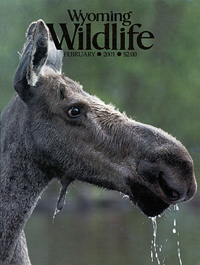
Amber Leberman gave the best presentation about submitting to magazines and how to keep your editor happy.  It was great! It was titled “Keeping Your Editor Gruntled.” Amber is the editor of the beautiful and august magazine Wyoming Wildlife. 

Afterwards we were urging her to write a book called Your Lazy Editor Loves You.  That was one of her main points: Your editor loves you.  She wants to love you.  Don’t make it hard for her.  Don’t be THAT WRITER.

For example, find out when he’s on deadline to go to print.  If you try to contact your editor on the week leading up to this, you’re going to get a very short answer, if any at all.  And, for heaven’s sake, don’t be that person who insists on continuing to talk.  When he says, “Sorry but I’m on deadline,” apologize and hang up. Deadline week is hell for them.


A lot of it is common sense ~ common sense that we lose when we’re wrapped up in our writerly agony. Query first ~ you don’t need to write on spec.  Don’t be difficult.  If the editor wants you to make edits, make them. Don’t be a prima donna. Get your stuff in on time. Make it your best work ALWAYS.  There are many reasons an editor rejects something, often not at all related to the quality of the work. Don’t take it personally. Be your best self. An editor will keep coming back to you if you do.

She was so charming and sensible in her presentation. She’s like, “Look. We want to like your work.  But we’re lazy, like everyone. Make it easy for us.” 

I am so stoked to get to know her and I can’t wait to hang out in the future and talk writing and herding cats ~ er, writers. She does a hard job and is amazing at it!

Here is Amber’s bio:
Amber Leberman is editor of Wyoming Wildlife, a monthly magazine for anglers, hunters and wildlife enthusiasts. She works with more than 50 freelance writers and photographers annually. Before coming to Wyoming, Leberman spent 13 years in various roles (including assistant editor, web manager and art director) with a nonprofit magazine group in Chicago, preceded by stints at Copley Press and the Chicago Tribune. She is an avid backpacker and fly angler.
Please check out Wyoming Wildlife and be awed!

December 2, 2013

The Stories Don’t Suck


(via)

It was a great Thanksgiving.  Amid driving to Omaha, eating deep-fried turkey and Guinness cake, seeing Frozen in 3D with cousins, and talking nonstop, I edited through my story collection.  Only one more story to go and I’ll have an almost final draft!

One thing that was cool about it was I used my Asus Infinity tablet with a docking station/keyboard to do it.  It was a little slow, but so totally worth it with the portability and flexibility.  I loved being able to sit at the dining room table with everyone around and work and then have it in the car on the way there and back.  Very productive.  The Word I use (Kingsoft Office) does not have full capabilities and takes a little to get used to, but it worked great.

But the thing I loved most was the thing that inevitably happens:  the stories didn’t suck.  Most writers I know are like this.  They write something, and they may think it’s good or not. But the more time that passes, the more they are convinced that the story is absolutely no good and they’ll be mortified when they go back and read it.  But when they do finally go back ~ you know what? ~ they’re not so bad.  In fact, some of them are decent.

That was my experience this weekend editing through my stories.  Some of them needed some work, especially the oldest ones, but the newer ones weren't half bad!

January 24, 2012

The War Between My Critical Faculties and My Social Faculties

As anyone who’s ever asked me to comment on a manuscript knows, it can be a hit or miss proposition. I have every intention of doing it. I look forward to it before I receive the manuscript and I’m all excited. When I get the manuscript, I’m stoked. I’m all “I’ll jump on that immediately, get it done, I’m so looking forward to it!” But then a niggle of doubt sets in, and I start to avoid a little. I think, what do I really know about giving feedback? You know what, maybe I really do suck at all this. Not only that, but I’m going to horribly offend this wonderful writer person who I adore. God I suck. Then the tension mounts even further, and it becomes this huge weight around my neck that I try to pull away from. Once I force myself to get started on the review, I’m fine. No problem at all. I’ve got confidence, and I think I give good feedback. You can imagine this makes preparing for workshop a bit of a challenge.

So some people have stage fright, and some people have writer’s block ~ I get editor’s block. It may seem silly. I mean, you just have to read, for heaven’s sake. Use your years of thinking about writing and apply it to this manuscript. Piece a cake. But, oh no, it isn’t.

What brought this up now is that a friend (hi, JoAnn!) asked me to help judge a high school writing contest recently. I really enjoyed reading all these young people’s work, and the contest has a fabulous rubric and supporting materials to help the judges. Some of these entries were fabulous pieces of art. But, as you can imagine, it took me a while to get to it.

I used to have the same problem when I was teaching freshman comp and science and technical writing. On one hand, I was supposed to be this supportive teacher and on the other I was the hammer of judgment giving them grades. I felt very comfortable with the former, but the latter was torture. I would think, this person is trying their hardest. They really are. I should cut them some slack. But then I can’t give everyone As. It just doesn’t work that way. I would know that the paper was a C at best, but the person was so nice. So to counter this I had to always go back and adjust grades to that the percentages would even out and be what everyone expects. I had to put my social faculties aside for my critical ones.

I blame my mom. (Hi, Mom!) She’s always been such a supportive person. We joke that if one of us seven kids were a serial killer, she’d say, “Isn’t that nice? I bet she’s very good at it!” I inherited it, and on the whole it’s not a bad quality to have.

Do you have this problem? When you’re going to give someone feedback, does it take forever for you to get to it?

April 29, 2010

Geek Heaven

Yesterday, I had a long-running conversation with someone about the hyphenation of adjective phrases before a noun. Oh, my writer/editor geek was just wallowing in the mud of hog heaven. I deliciously reacquainted myself with The Chicago Manual of Style (14th Edition) Sections 6.38 through 6.40 and avidly perused Table 6.1.

I had had the general rule in my mind (less is more, only hyphenate for clarity or according to a few guidelines, don’t hyphenate if the adjective phrase follows the noun), but I had forgotten the reasoning behind it. I rediscovered its simplicity, its elegance, and the clear and precise words that conveyed these ideas, and I quote:

For some years now, the trend in spelling compound words has been away from the use of hyphens. … A second helpful principle is this: When a temporary compound is used as an adjective before a noun, it is often hyphenated to avoid misleading the reader. … Formerly, adjectival compounds, except those beginning with an adverb ending in ly, were generally hyphenated before the noun they modified and open after the noun. The University of Chicago Press now takes the position that the hyphen may be omitted in all cases where there is little or no risk of ambiguity or hesitation.


Oooooooooh! Doesn’t the precision of the language just make you shivery all over?

Take the phrase fast sailing ship (CMS’s example). Is it a sailing ship that’s fast (in this case, no hyphen) or a ship that’s fast sailing (in this case, fast-sailing ship).

Table 6.1 has these fabulous descriptions of what to do if the adjective phrase consists of an adjective or participle plus a noun or an adverb plus a participle or adjective, each with great examples. But the phrases we were discussing were pulled from technical writing and were adjective phrases of noun plus noun referring to a noun ~ phrases like time structure map and reflection strength trace.

Some of the people we were talking with were scientists, so their considerations were more about how the meaning of the phrase was reflected in the punctuating mark. For example, does inserting a hyphen mean that each word is its own attribute to the noun or does it mean that they work together? Someone suggested using a forward slash. What does that mean when you insert a slash? Does it mean that the two things are opposite or the same thing? Does it mean that they are either/or?

As an aside, when I used to teach freshman comp and scientific and technical writing, I had a day where I talked about the meaning of a period and a comma and a semicolon as if they were road signs. Students seemed to understand and to dig it.

This discussion was why I returned to CMS. I knew that there was a grammatical reason for hyphenation relating to the function of the word in the sentence but I couldn’t explain it. I had to remind myself of the difference between a noun and an adjective. Wikipedia has a great entry under adjective about this:

In many languages, including English, it is possible for nouns to modify other nouns. Unlike adjectives, nouns acting as modifiers (called attributive nouns or noun adjuncts) are not predicative; a beautiful park is beautiful, but a car park is not "car". In English, the modifier often indicates origin ("Virginia reel"), purpose ("work clothes"), or semantic patient ("man eater"). However, it can generally indicate almost any semantic relationship.


So the test is to put the word after a to be verb: the [modifier] [noun] is [modifier]. So time and structure are both nouns because a time map is not time and a structure map is not structure. Likewise, a reflection trace is not reflection and a strength trace is not strength. But we could say that a strong trace is strong, and therefore strong is an adjective.

So, should time structure map and reflection strength trace be hyphenated? I first considered the rule that the simplest solution or least invasive is the best (the Occam’s Razor of grammar). So I think that time structure map is perfectly fine not to hyphenate. I tested this by asking: is it a structure map of time or a map of structure and time? It was the latter so it’s fine to leave the hyphen out.

The phrase reflection strength trace is a little different, I think. There is ambiguity there. Is it a strength trace of reflection? Or is it a trace of reflection strength? In the former case I think you’d use the phrase reflection strength trace ~ or if you really wanted to be clear, reflection strength-trace ~ and in the latter case you’d use reflection-strength trace.

What I’m Reading Today: I officially have a professional crush on Ian McEwan! He’s definitely in the pantheon of Virginia Woolf and Julian Barnes. I had read Saturday before and loved it, and now I gulped down On Chesil Beach in two nights. Oh, to be able to trace the motives and reactions of two people with such detailed and nuanced precision! To seem to be ruminating yet the reader is transfixed by the inexorable forward movement! On Chesil Beach (and probably a mild fever) gave me dreams that were both troubling and poignant.

February 22, 2010

Unsung Heros Who Make Your (Reading) Life So Much Easier

I know the words “government report” and “clear, stylish, and delightful” aren’t usually put together, but I’ve recently discovered just that. The USGS Suggestions to Authors (STA) of the Reports of the United States Geological Survey (seventh edition, 1991) is a fabulous document. It includes sections on naming of aquifers and mineralogic terminology, but it also contains sections such as “Duties, ethics, and professional writing practices” and “Suggestions as to expression.” It is the most well-written technical style guide I’ve ever read.

Here are some excerpts.

“Countless books and pamphlets have been published in recent years to alert aspiring authors to the need for clarity and precision in technical writing. … If the prime objective of technical writing is precise communication, what could be more pathetic than a failure to communicate.”

“Personal contacts take place between authors and many other contributors throughout the Survey publication process. Ideally, these contacts are harmonious and mutually beneficial. Interpersonal frictions sometimes arise, but even strong personal differences can yield positive results when everyone observes courtesy, good will, and professional respect.”

“Your reward for proofreading ~ however tedious the task may seem ~ is the satisfaction of an error-free publication.”

Wow. This is Strunk and White’s recommendations to the tee.

Technical writing and editing are unsung arts. All you technical writers and editors out there ~ I salute you!

What I’m Reading Today: I finished Carrie Fisher’s Wishful Drinking for book club. It has some very funny lines and some very traumatic material, but craft-wise it aspires to be so much more than it ultimately achieves. A nice light read.